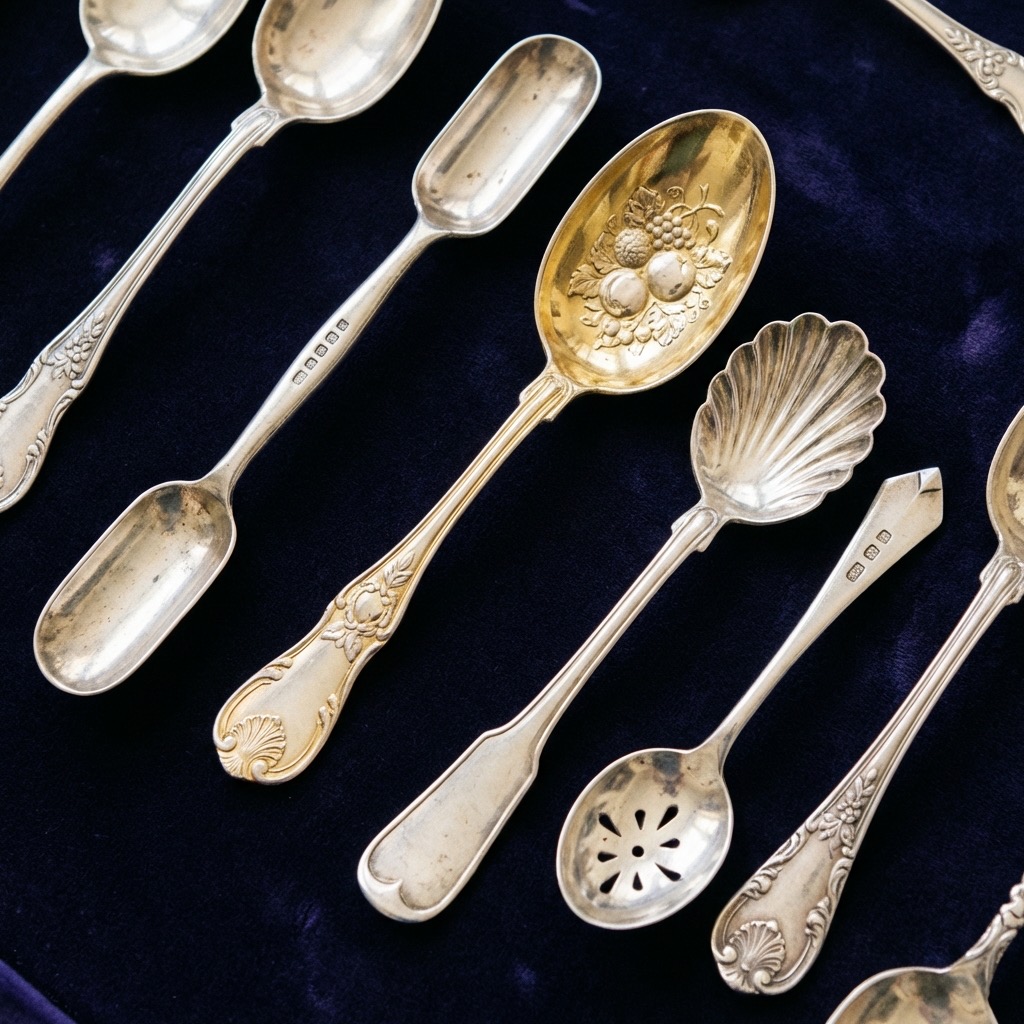
At Rarequiste, the most frequent question we receive is: “Q, what does this mark mean?”
For silver enthusiasts starting from scratch, facing the myriad of strange symbols from various countries—lions, moons, crowns, queen’s heads, eagle heads—can indeed be dizzying.
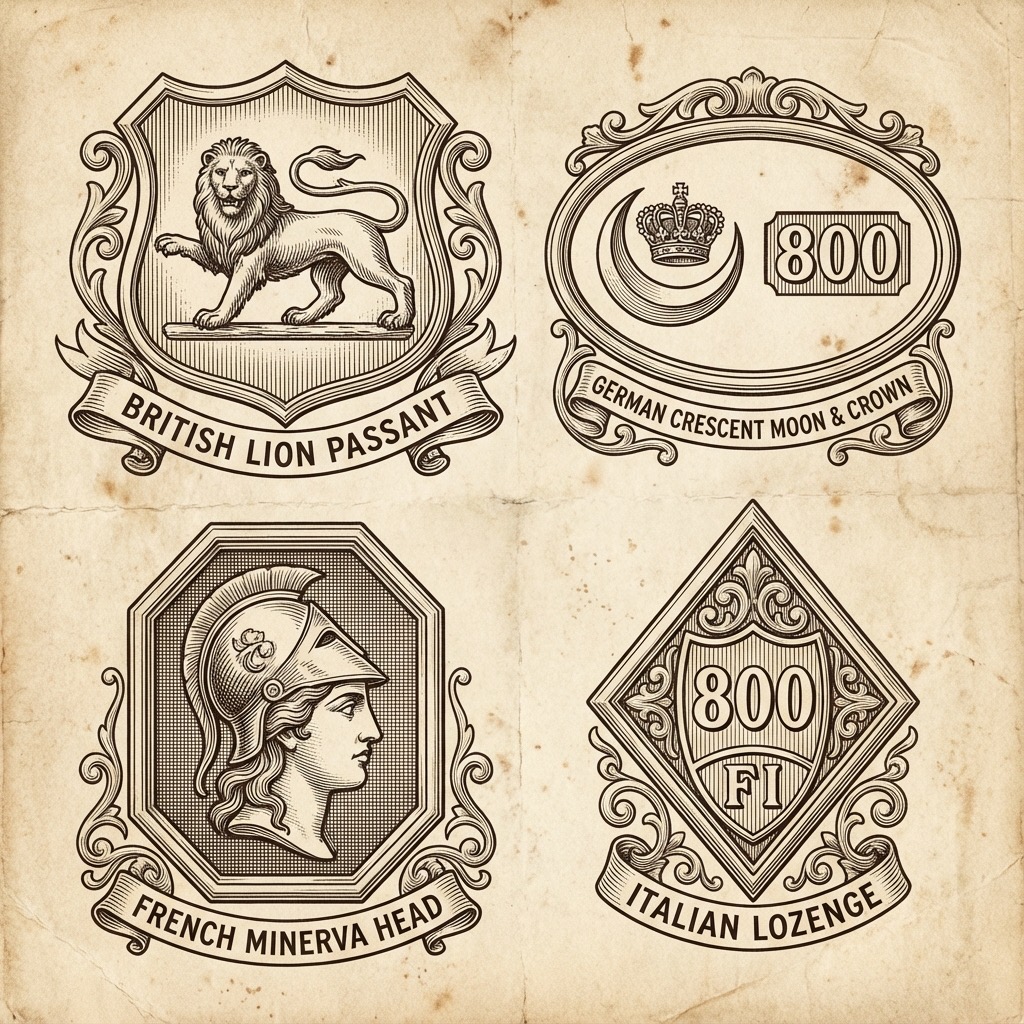
In fact, while the global silver hallmark system is complex, it boils down to Three Major Schools. As long as you master this underlying “Basic Law,” you can decipher the code like a detective and quickly lock down the nationality and history of a piece of silver.
1. The Why: Consumer Protection
Hallmarks are not just for decoration. They are one of the earliest forms of Consumer Protection in human history.
In medieval Europe over 700 years ago, silver was a very expensive currency. To prevent silversmiths from cutting corners by adding too much copper to the silver melt, Guilds and the State established rigorous testing systems. Only silver items that passed the inspection of the official “Assay Office” could be stamped with that row of sacred steel punches.
So, a hallmark is the silver’s ID Card and Quality Certificate.
2. The Big Three Systems
🦁 School 1: The Totem School (Sterling Standard)
Countries: UK 🇬🇧, Ireland 🇮🇪
This is the oldest, most rigorous, and most visually recognizable system. They don’t use numbers (like 925) to intuitively express purity, but Animal Totems.
- Core Feature: Must have a Lion (Thistle for Scotland, Harp for Ireland).
- Reading Logic:
- Lion Passant = Sterling Silver (925).
- City Mark = Place of Origin (Leopard’s Head for London, Anchor for Birmingham).
- Date Letter = Year of Manufacture (Precise to the year).
- Deep Dive: 👉 British Silver Hallmarks 101
🔢 School 2: The Number School (Metric System)
Countries: Germany 🇩🇪, Italy 🇮🇹, Austria 🇦🇹, USA 🇺🇸 (Partial)
This is the most intuitive and modern system. It stamps the purity in parts per thousand directly on the silver.
- Core Feature: Look for Arabic numerals.
- Common Values:
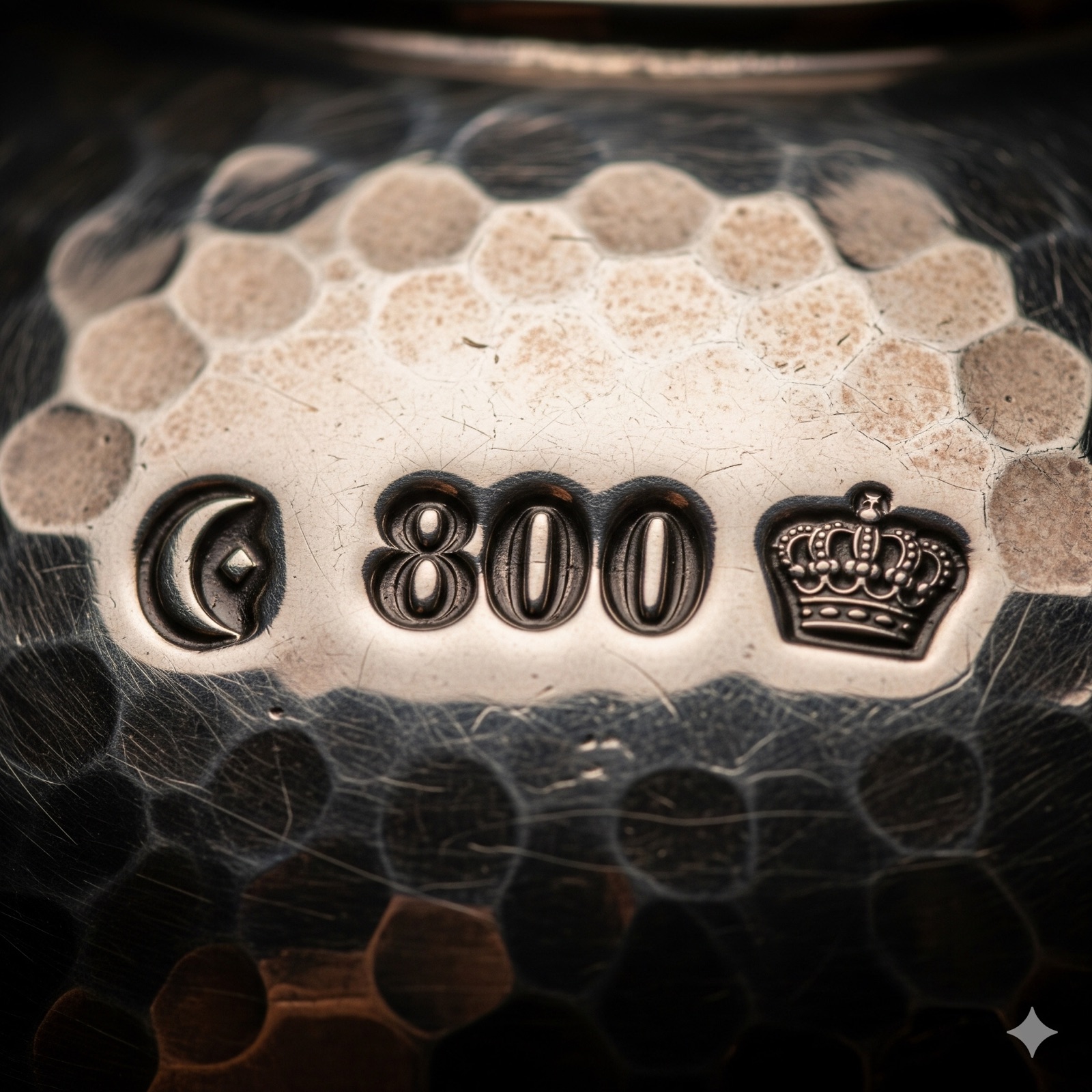
- 800 / 830 / 835: The standard for old German and Scandinavian silver. Harder and more durable than 925.
- 925 / STERLING: The US and modern international standard.
- 950: High purity silver.
- State Guarantee: Although based on purity numbers, countries add their own “State Marks” for endorsement.
- Germany: Crescent Moon & Crown. 👉 German Silver Hallmarks Guide
- Italy: Number inside a Lozenge (e.g., 1 VC). 👉 Italian Silver Hallmarks Decoded
- USA: The word “STERLING”. 👉 US Silver Marks Guide
🖼️ School 3: The Profile School (Pictorial System)
Countries: France 🇫🇷, Russia 🇷🇺 (Old)
This is the most artistic but also the most headache-inducing system. They use neither the common lion nor straight numbers, but the Profile of Mythological Figures. Distinctions in grade are made by the direction of the face, the shape of the frame, or even slight differences in eyebrows.
- France: Minerva (Goddess) profile in a helmet. Usually represents 950 High Purity Silver (1st Standard). An Eagle’s Head represents 18K Gold.
- Russia (Imperial): Kokoshnik (Profile of a lady in traditional headdress). Combined with the unique “Zolotnik” unit (e.g., 84, 88). 👉 Russian Enamel Silver Guide
3. The Global Hallmarks Cheat Sheet
Take this chart with you to the antique shop next time:
| Icon Feature | Suspect Country | System | Note |
|---|---|---|---|
| 🦁 Lion (Walking Left) | 🇬🇧 UK | Sterling (925) | The most common antique silver. |
| 🌙 Crescent & 👑 Crown | 🇩🇪 Germany | 800 / 835 / 925 | Unified standard after 1888. |
| 👤 Goddess Profile | 🇫🇷 France | 950 (1st) / 800 (2nd) | Tiny lozenge or barrel frame. |
| 💠 Lozenge Frame | 🇮🇹 Italy | 800 / 925 + Province | e.g., 1 AL is Buccellati. |
| 👷 Lady’s Head/84 | 🇷🇺 Russia | 84 Zolotnik (~875) | Unique Imperial system. |
| STERLING | 🇺🇸 USA | 925 | Simple and direct, often with maker names (Tiffany, Gorham). |
4. The Danger Zone: It’s NOT Silver
Last but not least: Avoid Silver Plate, unless you are buying it for aesthetics, not material value.
If you see the following marks, they are usually NOT solid silver:
- EP / EPNS (Electro Plated Nickel Silver)
- EPBM (Electro Plated Britannia Metal)
- A1 / AA (Plating quality grade, not purity)
- German Silver / Nickel Silver (This is Cupronickel, containing Zero Silver!)
👉 Learn More: Decoding Silver Plate: How to Read EPNS and EPBM
5. Conclusion
Mastering the Basic Law of Hallmarks puts a world map in your hands.
Every tiny mark is a key to a portal in time and space. It could be a foggy morning in London in 1780, a ball in Paris in 1900, or a dinner party in Berlin in 1920.
Start your exploration.