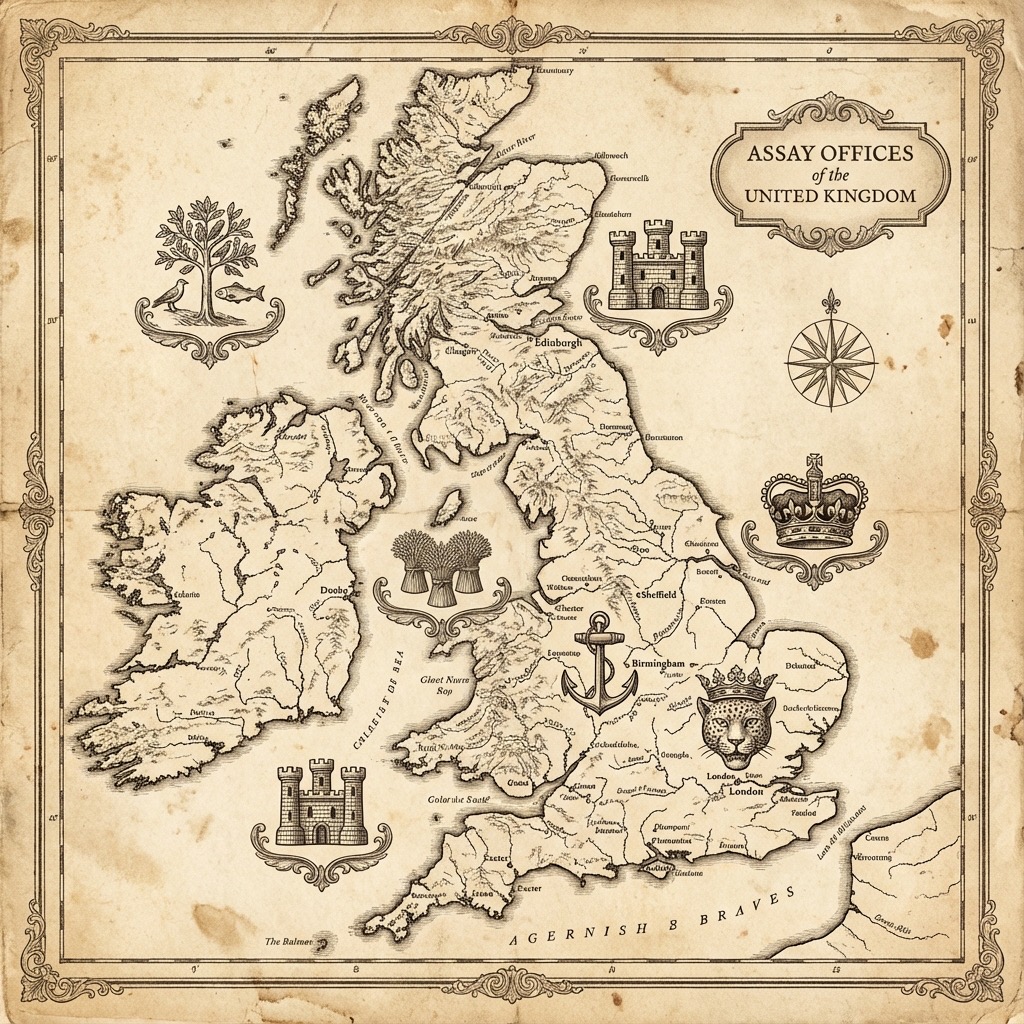
In the world of antique silver collecting, differentiating between British and American systems is the first hurdle for beginners:
- British Hallmarks: A strict code of law. State-guaranteed, with lions for Sterling, leopards for London, and date letters. Clear and authoritative.
- American Marks: A free market “Wild West”. No uniform government Assay Offices, relying entirely on the manufacturer’s reputation and trademarks.
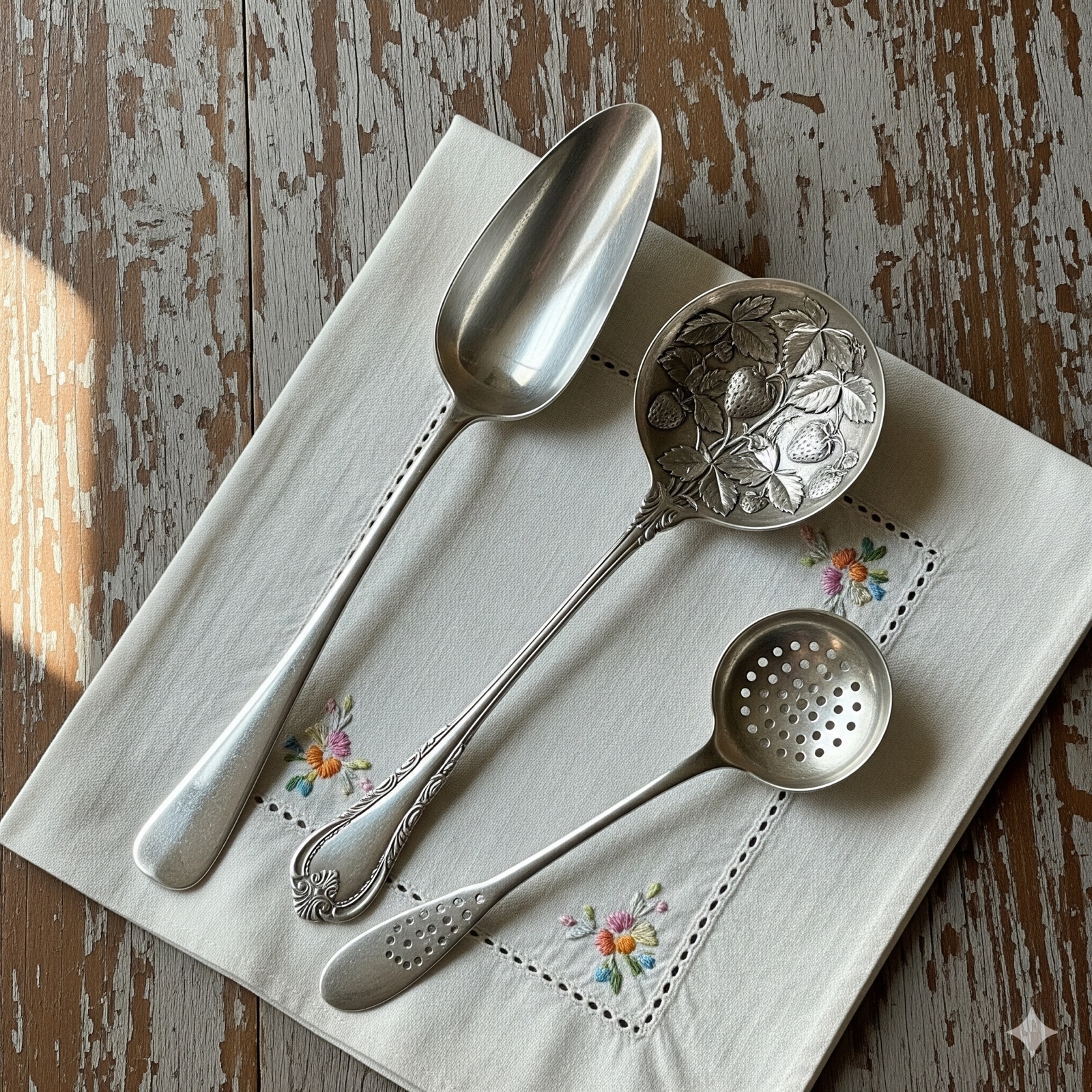
Collectors often ask: “R, this spoon has an eagle and a ‘W’ on the back. What year is it?”
Today, referring to authoritative sources like SilverCollection.it, RareQuiste brings you a systematic guide to cracking the code of American Silver Trademarks.
🇺🇸 Rule #1: Look for “Sterling”
First, the good news: Americans are direct.
The vast majority of American silver made after the 1860s will simply have one of the following word marks stamped on the back:
- Sterling
- Sterling Silver
- 925/1000
If you see these words, congratulations, it is 925 Sterling Silver. You don’t need to hunt for a “Lion Passant” or squint at a “Minerva Head” in a tiny lozenge.
But knowing it’s silver isn’t enough. The real question is: Who made it?
🔍 The Three Types of Maker’s Marks
American Maker’s Marks generally fall into three categories, ranging from obvious to cryptic.
1. Easy Mode: Full Name

This is the most user-friendly scenario. Many major manufacturers simply stamped their full name: * Tiffany & Co. * Black, Starr & Frost * J.E. Caldwell
A quick Google search will reveal their history immediately.
2. Medium Mode: Initials

When space was limited or for stylistic reasons, makers often traveled under initials. You’ll need to look these up in a directory.
- Example: You see “E.H.B.”.
- Decoded: Checking an alphabetical index reveals this stands for Edward H. Breese.
3. Hard Mode: Pictograms 🦁⚓️🪙

This is the most fun but also the most confusing part. Many old American silver houses used “Pictures” as their trademarks, which can be misleading.
The classic example is Gorham:
- Their trademark is: Lion (facing right) + Anchor + Gothic ‘G’.
- The Trap: Novices see a lion and think “British Silver”. They see an anchor and think “Birmingham”. But together, this is the trademark of the American company Gorham!
You need to learn to “read pictures” and search databases by category (Animals, Crowns, Weapons, Stars, etc.).
- Winged Lion? Likely Whiting Mfg Co.
- A Boot? That’s the early mark of the Watson Company (before they switched to a pennant flag).
- Indian Head? That belongs to Frank W. Smith Silver Co.
Further Reading: Detailed guides for major American brands:
📅 Dating: How Old Is It?
Here is the headache with American silver: There is no uniform national date letter system.
Except for a few major manufacturers who voluntarily established their own dating systems, most commercial American silver cannot be dated to a specific year. You can only estimate the period based on style (e.g., Art Nouveau, Art Deco).
The “Big Four” with Date Codes:
If your silver comes from one of these brands, you might be lucky enough to pinpoint its birth year:
-
Gorham (1868-1933)
- Gorham used a sequence of letters A-Q (1868-1884), followed by a series of realistic miniature icons (1885-1933).
- E.g., 1899 was a small broom, 1900 (the turn of the century) was a circle, and 1910 was a bee.
- 👉 See full Gorham Date Code Chart
-
Tiffany & Co. (1854-1965)
- Tiffany used the initial of the incumbent President to date their pieces.
- M (1875-1891): Edward C. Moore period (The Golden Age).
- M (1875-1891): Edward C. Moore period (The Golden Age).
- L (1956-1965): William T. Lusk period.
- 👉 See full Tiffany Directorship Table
-
Reed & Barton (1928-1957)
- They also used pictorial symbols for years. For example, 1940 was a parachute-like symbol.
-
S. Kirk & Son (1815-Now)
- As America’s oldest silversmith, Kirk is dated by the evolution of its firm name.
- E.g.,
S. Kirkis early (1815-1846),S. Kirk & Sonis mid-period, andInc.appears after 1925. - 👉 See full Kirk Dating Guide
-
International Silver Co.
- Sub-brands like Wilcox or Meriden sometimes used specific date codes, often found next to the
Ismark.
- Sub-brands like Wilcox or Meriden sometimes used specific date codes, often found next to the
💡 R’s Hunting Tips
When you encounter American silver at a flea market, follow this workflow:
- Find “Sterling”: Confirm it is solid silver first. If you only see “A1”, “EPNS”, “Triple Plate”, marks, put it down (unless the design is exceptional)—it’s silver plate.
- Photograph the Mark: Use macro mode to get a clear shot of the pictorial trademark.
- Search Online: Use authoritative databases like 925-1000.com or SilverCollection.it.
- Saw an animal? Check the “Animals” section.
- Saw a crown? Check the “Crowns” section.
While American silver marks lack the forensic precision of the British system, decoding the unique story behind each logo is half the fun of collecting.
References: