If modern jewelry is for showing off, then Victorian jewelry is for Remembrance.
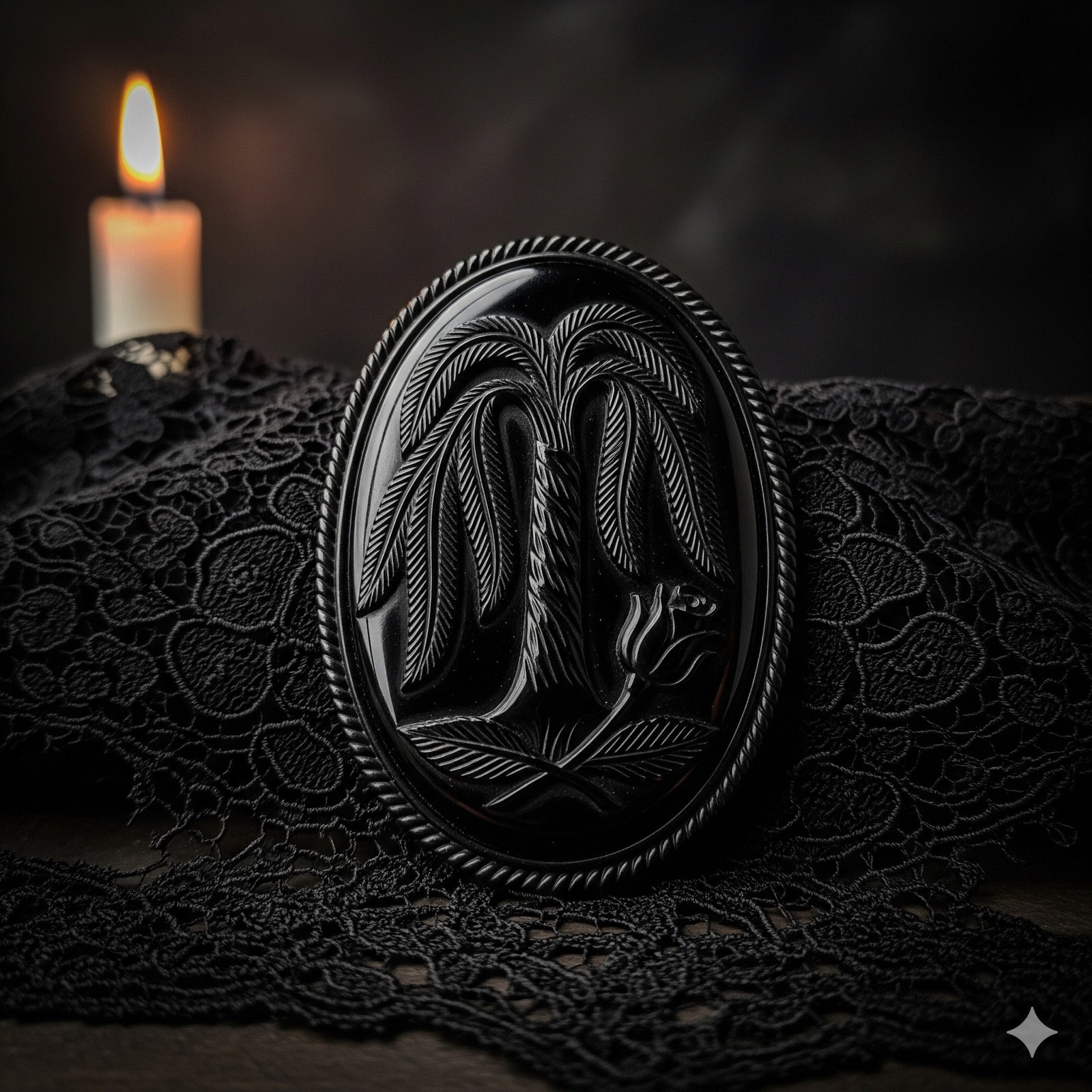
In 1861, Prince Albert passed away, and Queen Victoria fell into grief for 40 years. She began to wear only black clothes and black jewelry. As subordinates followed the superior, the whole of Britain entered a Grand Mourning Period.
This gave birth to a unique category of collectibles: Mourning Jewelry.
🖤 Colorful in the Dark: Jet and Onyx
In that period, black was the absolute mainstream. But not all black stones are the same.
1. Whitby Jet
This is the crown of mourning jewelry. It is actually a fossilized wood, mainly from Whitby, Yorkshire, UK.
- Identification Point: Jet is very light, as light as plastic. It feels warm (not cold) to the touch, and will carry static electricity after friction. If you pick up a huge black necklace but feel it is floatingly light, it is likely precious Jet.
2. French Jet
Don’t be fooled by the name, it is actually black glass.
- Identification Point: Heavier than real jet, feels cold to the touch, usually has mold marks or tiny chips on the edges. The price is much cheaper than real jet.
3. Onyx
Often used for gold jewelry setting. It is harder than glass, has glass luster after polishing, and is usually cut into flat slices for men’s rings or brooches.
💇♀️ Hair Jewelry: Soul in Hair Strands
This may be the custom that modern people find most “creepy” but also most affectionate—making jewelry with the hair of the deceased.
In the Victorian era, people believed that hair contained the soul and vitality of a person. Craftsmen would weave hair into extremely complex patterns (like wheat ears, flower baskets or plaids), seal them under crystal or glass covers; or grind hair and mix with glue to make shapes similar to three-dimensional sculptures.
Collection Tips:
- Don’t be afraid: In the Western collection world, Hair Jewelry is a very high-level category, representing superb weaving craftsmanship.
- In Memory Of: Look at the back of the jewelry, usually engraved with the name of the deceased and the date of death (such as
Obit 1876). These inscriptions make each piece of jewelry a unique historical archive.
💙 Forget-Me-Not
Not all mourning jewelry is black. Turquoise represented the color of “Forget-Me-Not” flowers in the Victorian era.
If you see a small ring set with turquoise and arranged in the shape of a flower, it is usually a gift for a parting lover or to commemorate the deceased, meaning “Think of Me”.
At Rarequiste, we cherish these old objects that carry emotions. They remind us: Love is longer than life.