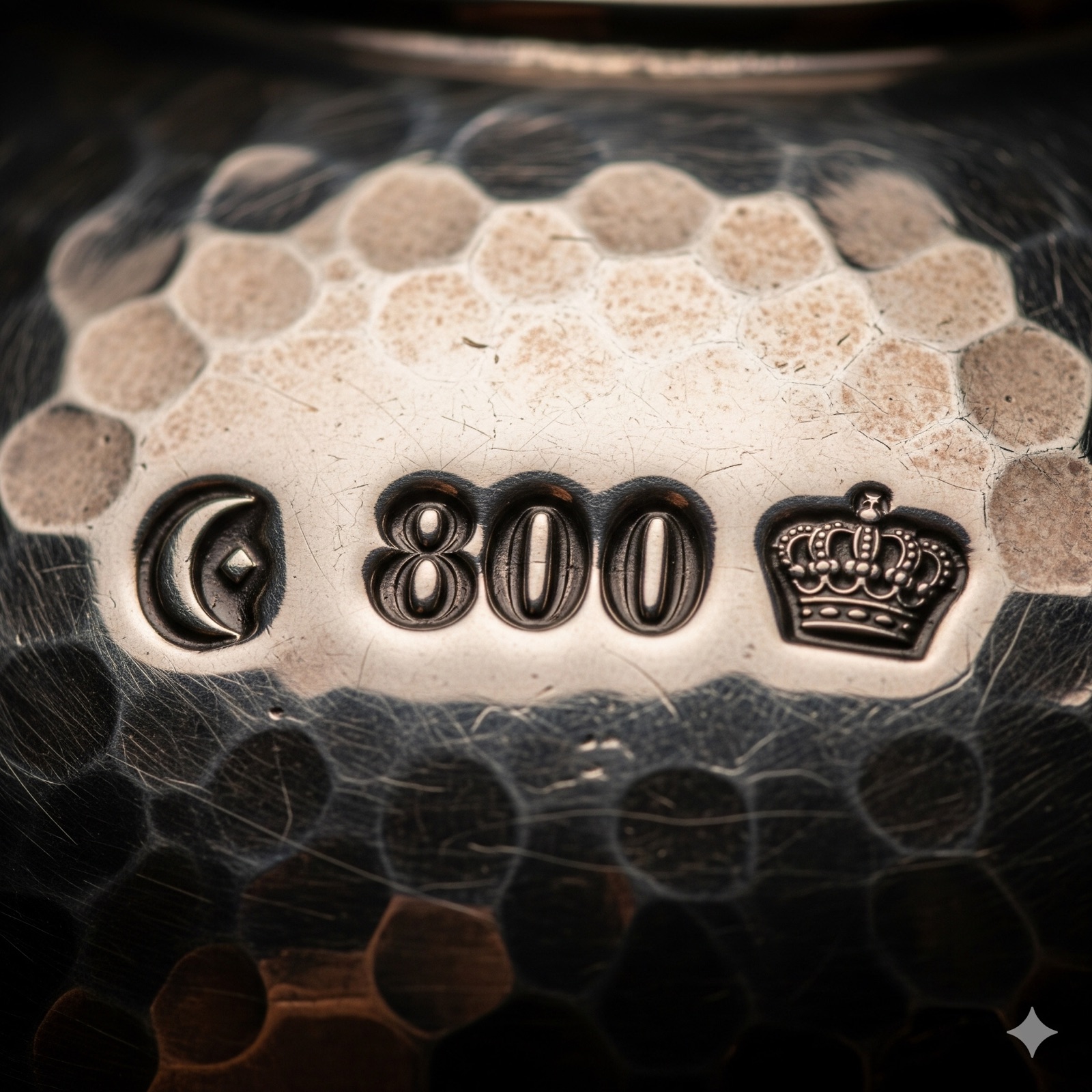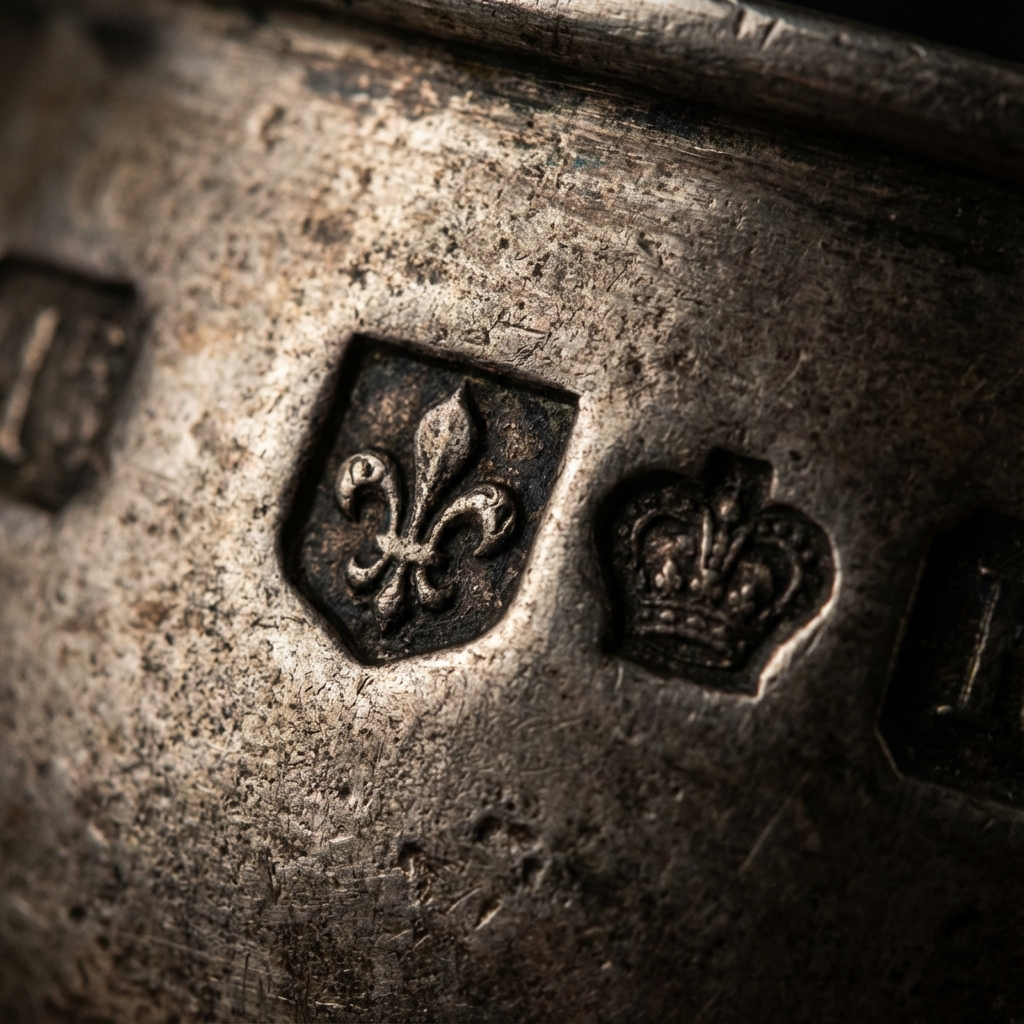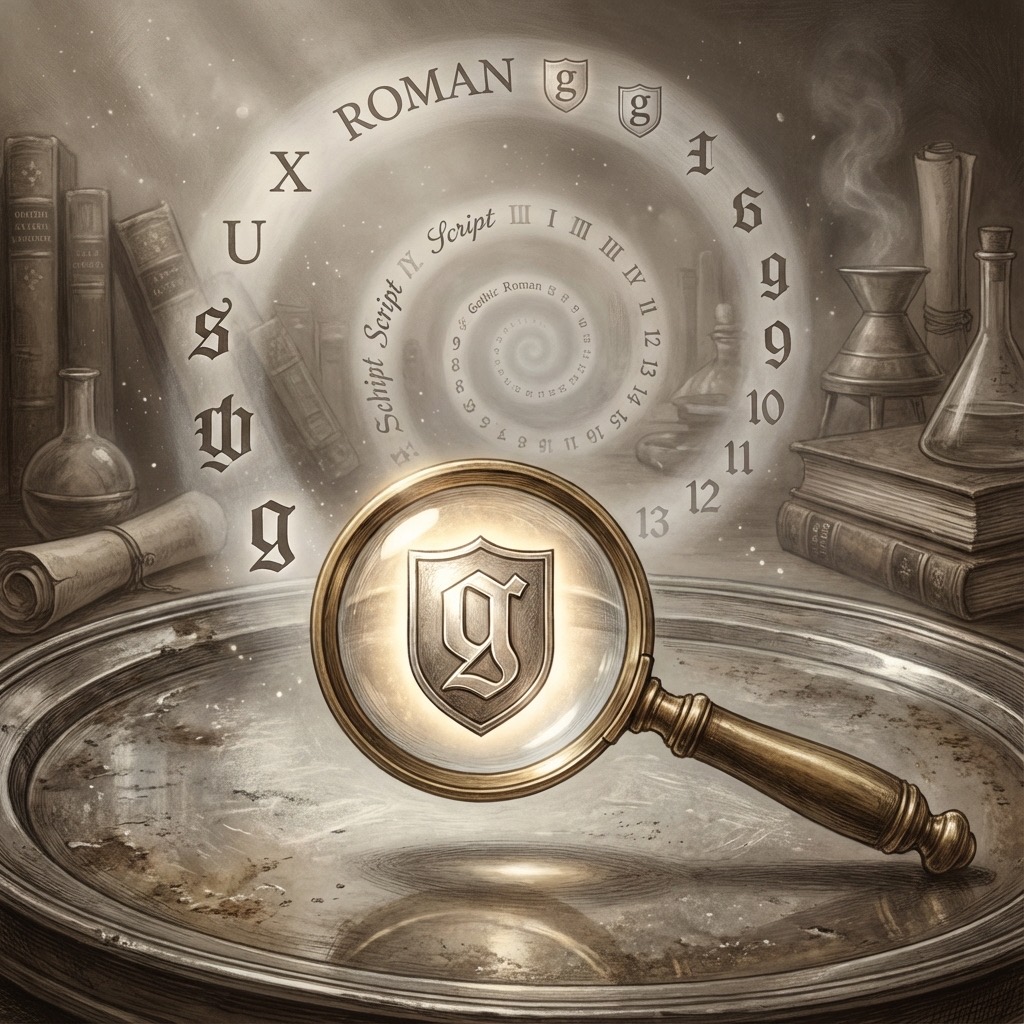
In the flea market, the most common question I hear isn’t “Is this sterling?”, but:
“How old is this spoon?”
For British silver, this question usually has an incredibly precise answer—not “circa 19th century,” but “1842.”
This is thanks to the most love-hate part of the British Hallmarking system: Date Letters. But did you know? The original intention of this system was not to record time, but for “Accountability”.
📜 1478: Where It All Began
Before 1478, London silver only bore the “Leopard’s Head” mark. If a piece was found to be substandard, while the Goldsmiths’ Company could be held liable, it was difficult to legally penalize a specific individual.
To close this loophole, in 1478, Edward IV enacted a new law (Act 17 Edward IV, c. 1): Every piece of silver must be the responsibility of a specific Assay Master (or anciently, the Keeper of the Touch).
To clarify responsibility, the Guild decided: A specific letter would be used to mark the tenure of each Assay Master. If a piece of silver later proved defective, one only needed to look at the letter to know which Assay Master had passed it.
So, the original name of this letter was not “Date Letter”, but “Assayer’s Mark”.
📅 Not a “Calendar Year”
Here is a huge piece of trivia: The change of letters does not happen on January 1st.
Since this is an internal administrative mark of the Guild, the letter change usually occurred on the Guild’s election day.
- Before 1660: The letter usually changed on St. Dunstan’s Day (May 19th). (St. Dunstan is the patron saint of goldsmiths).
- After 1660: To commemorate the Restoration of Charles II, the changeover day was moved to May 29th.
This means that a letter ‘A’, which does not follow the calendar year, actually covers, for example, the second half of 1776 and the first half of 1777.
🔠 The Logic of the Cycle
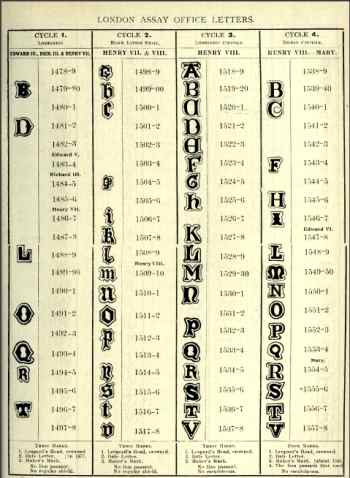
To distinguish different cycles, the Guild created differentiation by changing the Font and the Shield shape.
- 20-Year Cycle: Early alphabets usually had only 20 letters (A to U, skipping J, and with U/V used interchangeably; no W, X, Y, Z).
- The 1697 Anomaly: This was the most chaotic but interesting year in history. To enforce the higher purity Britannia Silver, the old letter cycle was forcibly interrupted. A new cycle began in March 1697, using a “Court Hand” lowercase ‘a’. But because the election was in May, this letter ‘a’ was only used for 2 months (March 27 - May 29), making it one of the shortest-lived and rarest date marks in history.
🕵️♂️ Three Dimensions of Cracking the Code
To date accurately, beginners must confirm three dimensions simultaneously:
- The Font: Is it Gothic, Roman, or Script?
- The Shield Shape: Is it a shield, a square, or a circle? (This is the critical clue most often ignored!)
- The City (Assay Office): This is the biggest trap! An ‘A’ in London is usually NOT the same year as an ‘A’ in Birmingham!
📅 The Survival Cheat Sheet
Since we can’t memorize 700 years of tables, here are some rapid judgment rules for the most common antiques on the market.
👑 The Victorian Era (1837-1901)
This is the era you are most likely to encounter.
- 1836 - 1855: Black Letter Capitals 𝕬.
- 1856 - 1875: Black Letter Small 𝖆.
- 1876 - 1895: Roman Capitals A, in a round shield (This is the most common).
🤴 The Georgian Era (1714-1830)
- The Duty Mark (Monarch’s Head) is the MVP here! If you see the profile of a King, the range instantly narrows to 1784-1890.
- London’s alphabet in this period often used Small Roman letters with a shield frame.
🛠 The Toolbox: The Best Tool is “Looking It Up”
Don’t try to memorize the tables. Even Q double-checks the charts when identifying expensive silver.
Recommended resources:
- British Hallmarking Council: Official queries.
- 925-1000.com: Comprehensive data.
- SilverMakersMarks.co.uk: Specialized in British makers and dates.
📝 Summary
The Date Letter is not just a “production date”. It is a living fossil of the legal reform of 1478, a legacy of St. Dunstan.
Next time you decode that letter to “1896”, look up what happened that year. Maybe the first modern Olympic Games were being held in Athens. Suddenly, you’re holding not just silver, but a footnote of history.
References
🇬🇧 British Silver Series
- The Basics: British Silver Hallmarks: Decoding the 700-Year-Old System
- The Map: The Lost Cities of Silver: A Guide to British Assay Offices
- The Timeline (You are here): The Da Vinci Code: How to Date British Silver in Seconds?