If there is a “hierarchy” in silver collecting, purity is undoubtedly the primary standard for class division.
Many beginners fall into the black-and-white trap: “If it’s not 925 Sterling, it’s fake.”
In reality, between 925 Sterling and Silver Plate, there exists a vast grey area—such as American Coin Silver or Continental 800 Silver. They are all solid silver, just of different purities.
Today, let’s dissect this “food chain” of the silver world.
👑 Tier 1: The Aristocrats (Solid Silver)
“Solid” here doesn’t mean 100% (which is too soft for utensils), but compliant with legal standards.
1. Britannia Silver (958)
- Purity: 95.84%
- Hallmark: Lion’s Head Erased or Britannia figure.
- Status: The highest tier. Typically found on British silver between 1697-1720, or modern high-end commissions. Softer than sterling, with a deeper luster.
2. Sterling Silver (925)
- Purity: 92.5%
- Hallmark: Lion Passant or the word “Sterling”.
- Status: The global standard. A perfect balance of hardness and luster, the “gold standard” (pun intended) of the collecting market.
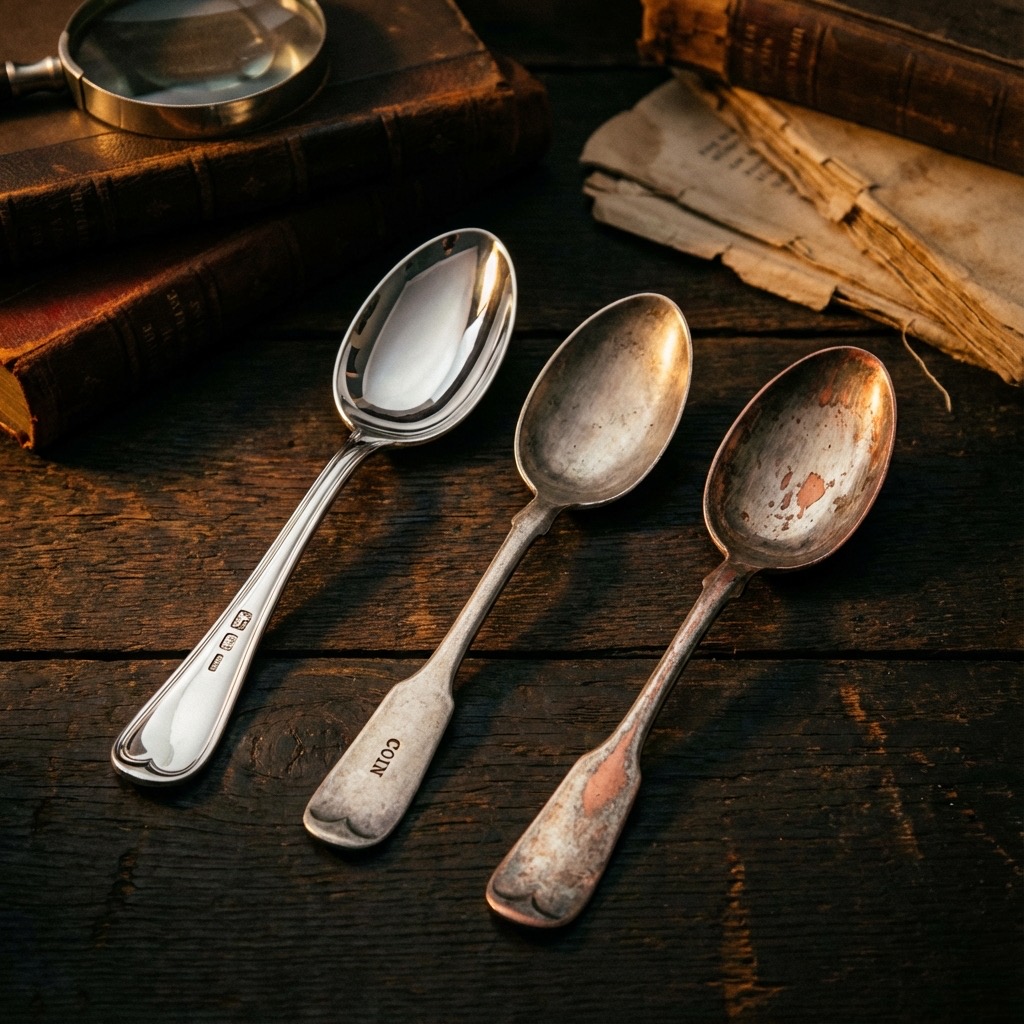
3. Coin Silver (900)
- Purity: 90% (Often marked “Pure Coin”, “Coin”, “Standard”, or “Dollar”).
- Origin: The highlight of this guide. Before the great Comstock Lode discovery in the 1860s, early American silversmiths (think Paul Revere era) were historically short on raw silver. Their only source was melting down circulating currency (mainly Spanish Reales or European coins). These coins were typically 900 purity.
- ID Tip: If you see an early-to-mid 19th-century American spoon marked only with COIN or PURE COIN, cherish it. Though lower in purity, it is often rarer and historically more significant than later Sterling pieces.
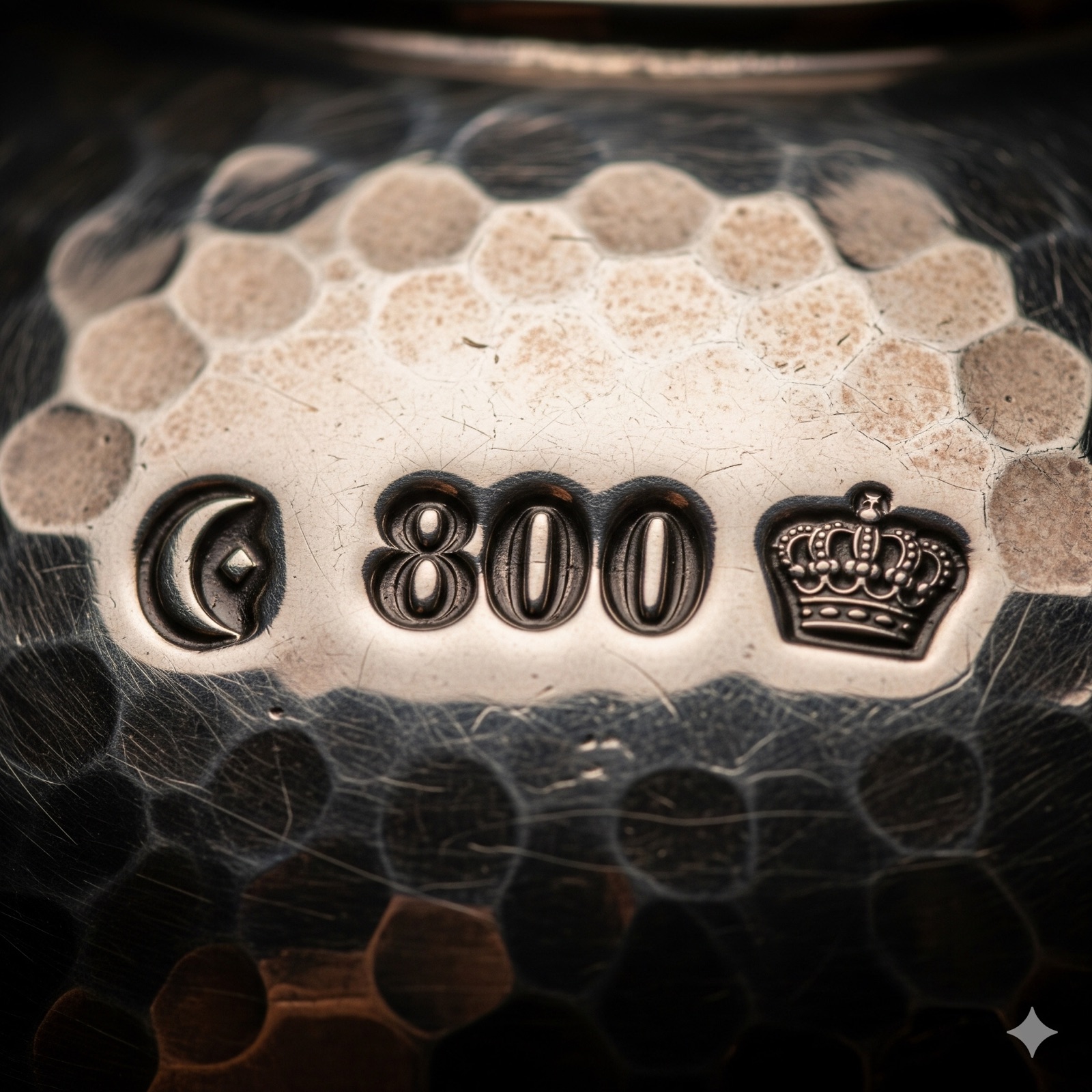
4. Continental Silver (800/830/835)
- Purity: 80% - 83.5%
- Hallmark: Numbers 800, 830, 835.
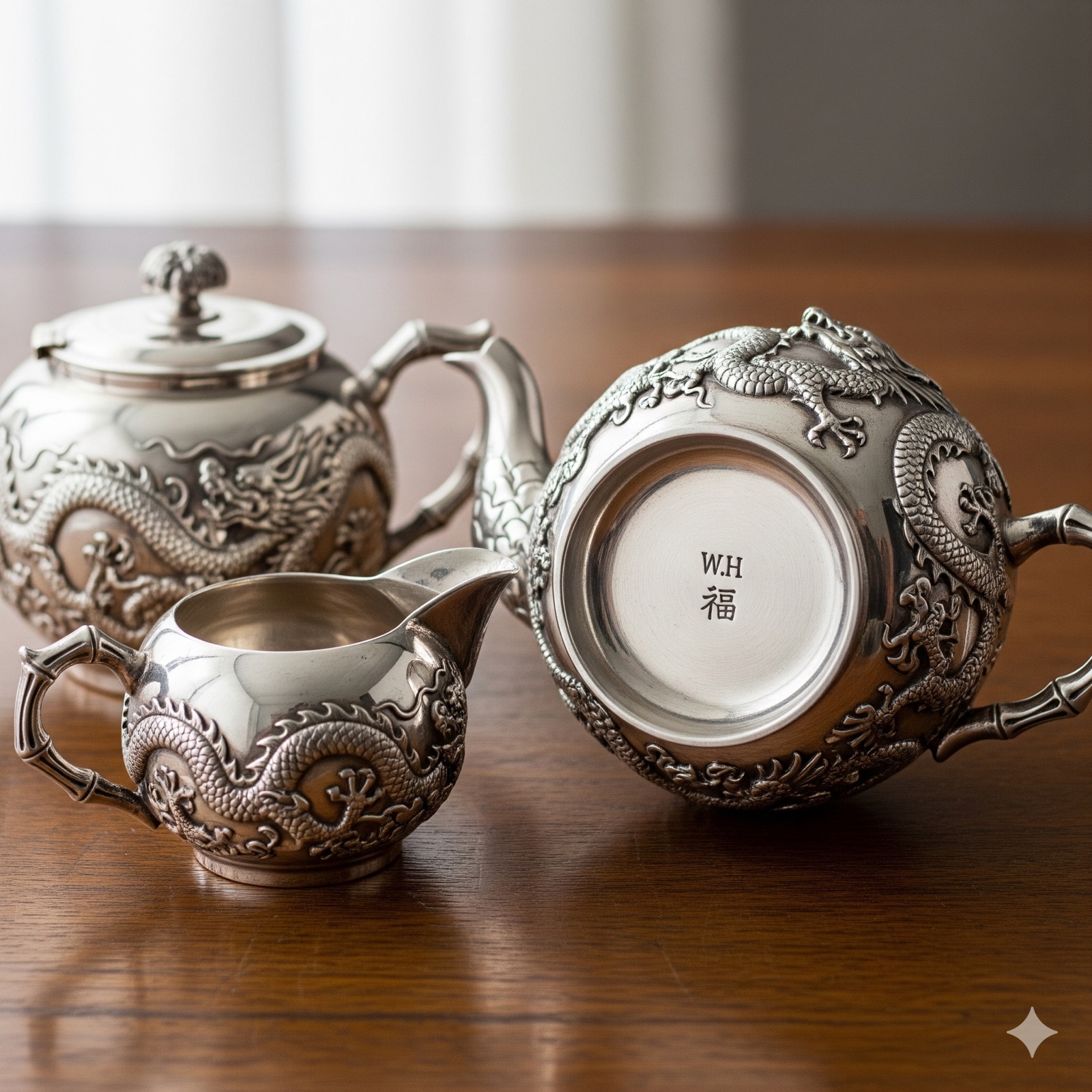
- Status: Prevalent in Germany, Italy, and Scandinavia. While lower in silver content, it is harder, making it ideal for large items (trays, candelabras) or intricate pierced work.
Myth: Don’t assume 800 is “junk”. Many German Hanau 800 silver pieces possess artistic value far exceeding ordinary British 925 silver.
🎭 Tier 2: The Noble Impostors (The “Good” Plate)
While technically plated, these items are highly collectible due to their unique craftsmanship.
1. Old Sheffield Plate (OSP)
- Process: Physical fusion of silver to copper (The Sandwich).
- Era: 1743 - 1840.
- Value: High. Often exceeds sterling. It represents the pinnacle of early Industrial Revolution craftsmanship.
- Features: Bleeding, Turned-over edges.
- 👉 Deep Dive: Old Sheffield Plate Guide
2. Close Plate
- Process: Silver foil tightly soldered onto Iron or Steel. Used for items requiring strength, like snuffers or knife handles.
- ID: If a magnet sticks to something that looks like antique silver, it might be Close Plate—and if it’s 18th century, it’s still valuable!
💀 Tier 3: The Commoners (The “Base” Plate)
Below the collecting “pass line,” unless bought purely for decoration.
1. Electroplate (EPNS/EPBM)
- Process: Chemical electro-deposition. Ultra-thin silver layer.
- Hallmark: EP, EPNS, A1.
- Value: Utility value only. Once worn to base metal, value drops to near zero.
- 👉 Deep Dive: Decoding Electroplate Marks
2. Nickel Silver / German Silver
- Feature: Has “Silver” in the name, but contains 0% Silver.
- Reality: It’s Cupronickel (Copper-Nickel-Zinc alloy).
- Advice: Run away.
📊 Summary: The Cheat Sheet
| Type | Purity | Marks Example | Advice |
|---|---|---|---|
| Britannia | 95.8% | Lion’s Head / 958 | Top tier, Rare. |
| Sterling | 92.5% | 🦁 / Sterling / 925 | Mainstream, Liquid. |
| Coin | 90% | COIN / STANDARD | Early American, Historic. |
| Continental | 80-83.5% | 800 / 830 | Durable, focus on Design. |
| Old Sheffield | Fused | No mark / Suns | ”Plate” worth more than “Solid”. |
| EPNS | 0% (solid) | EP / A1 | Buying for decor only. |
| German Silver | 0% | German Silver | Do Not Buy. |
Next time you see a COIN mark, pay respect to that spoon forged from melted history; when you see 800, don’t dismiss it—it might carry the finest German engraving.