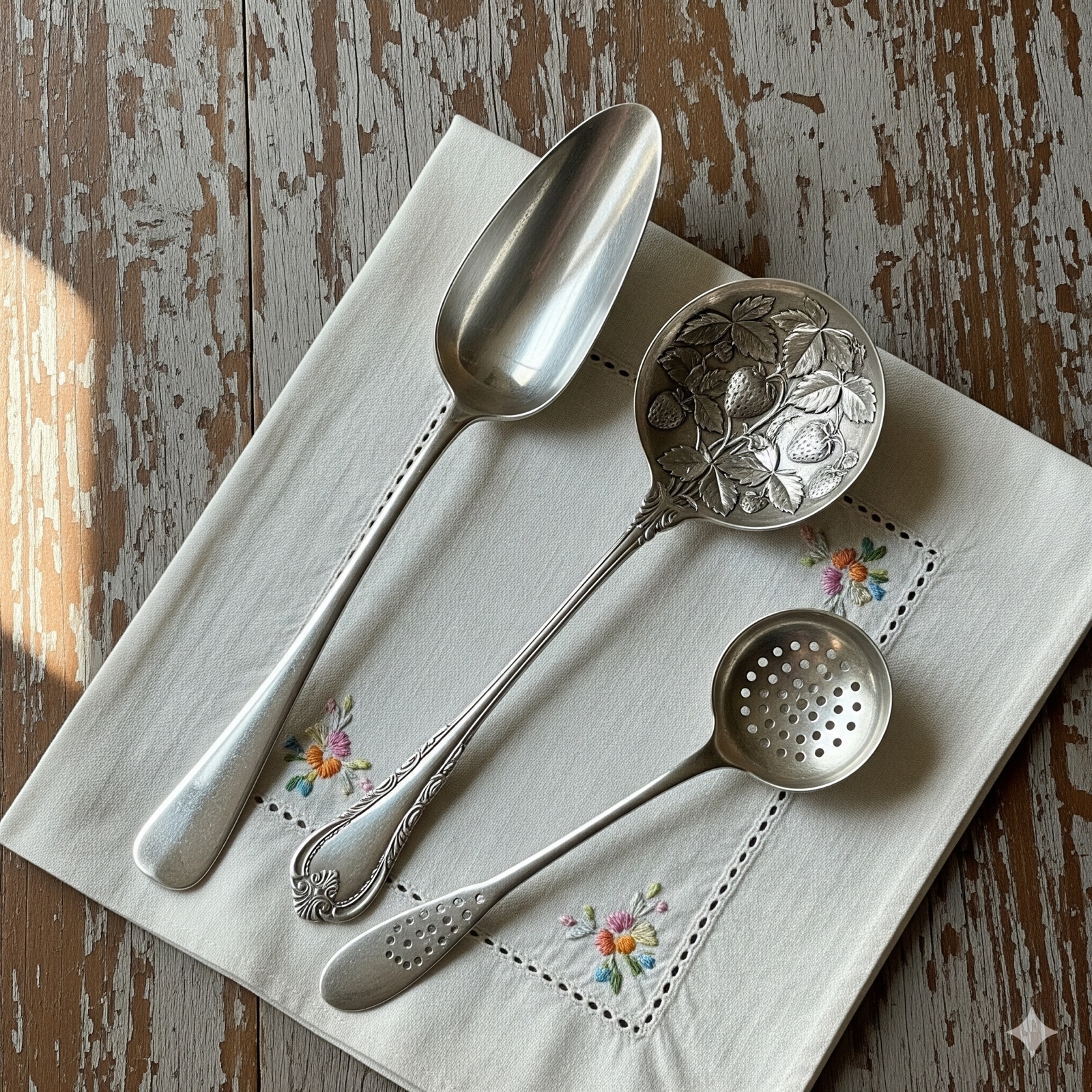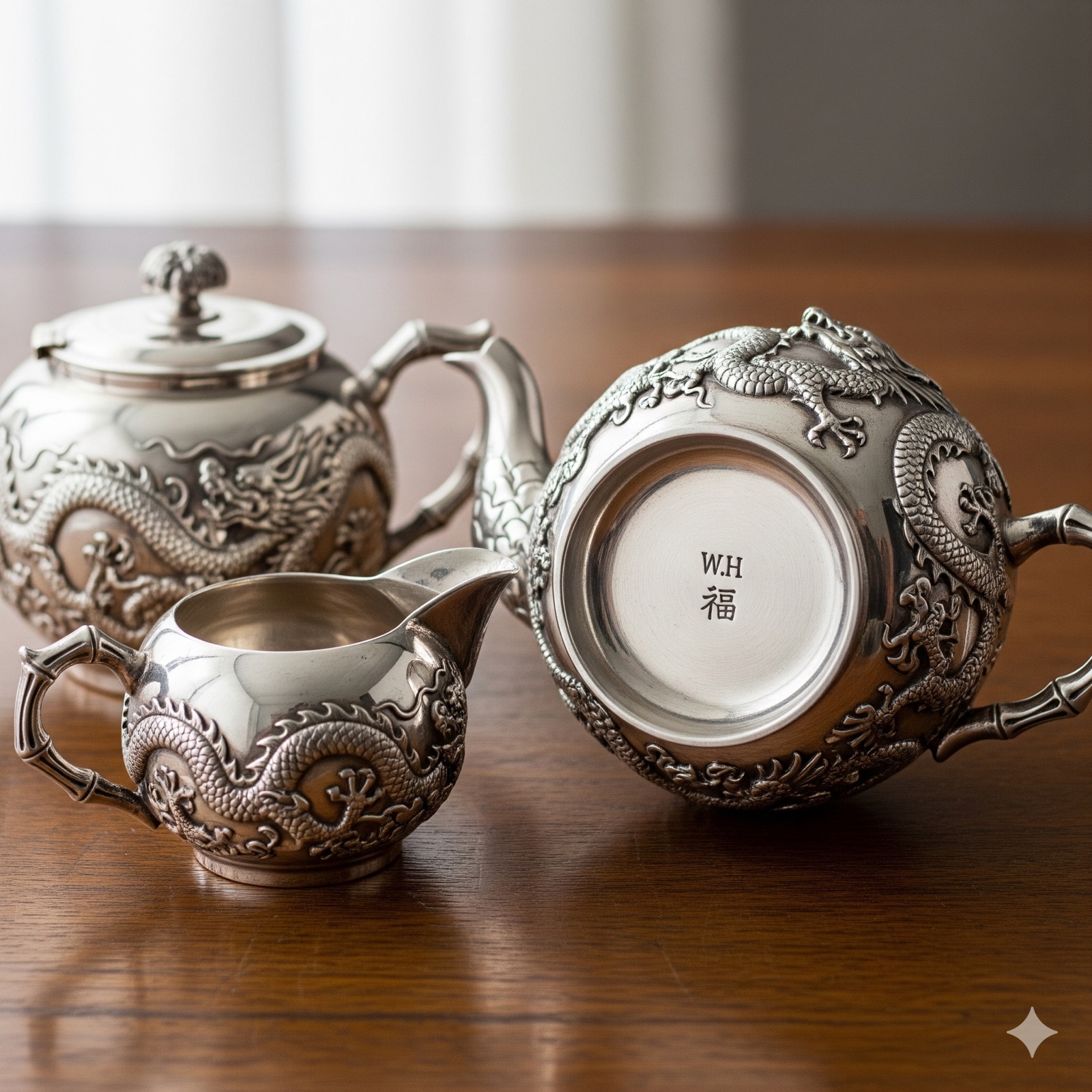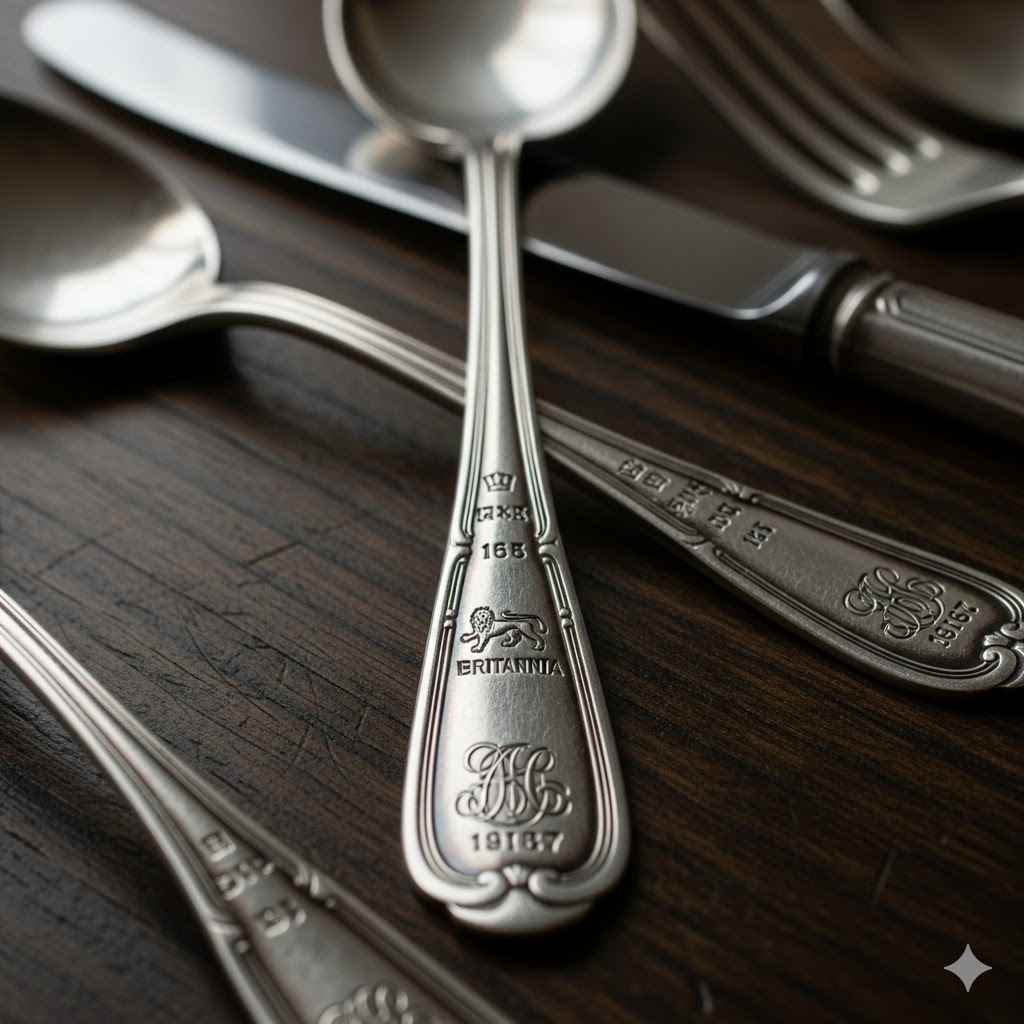
In Rarequiste’s collection philosophy, British Silver always holds a special place. Not only because of their exquisite craftsmanship, but also because of the Hallmarking System that has lasted for more than 700 years.
For beginners, that row of tiny mysterious symbols is like the Da Vinci Code. But as long as you master the key to deciphering it, you can read its past and present life the moment you pick up an old spoon: Who made it? Where was it made? In which year was it made? And most importantly—is it solid silver?
Today, Q will take everyone to dismantle this code.
🧐 What are Hallmarks?
Hallmarks are not simple trademarks. It is one of the earliest forms of consumer protection in the world, starting in the era of Edward I in 1300. All gold and silver items must be sent to the Goldsmiths’ Hall for Assay, and marked after passing.
Usually, a standard piece of British antique silver will have 4 to 5 stamps:
- Standard Mark: Confirms purity.
- City Mark: Confirms origin (Assay Office).
- Date Letter: Confirms year.
- Maker’s Mark: Confirms the maker.
- Duty Mark: Only available in specific periods (1784-1890), representing tax paid.
1. Standard Mark: Looking for that “Lion” 🦁
This is the first symbol our eyes look for when picking up silverware at a flea market.
🦁 Lion Passant
If you see a lion walking proudly to the left (Lion Passant), congratulations, this is the mark of Sterling Silver (925). This means the silver content is at least 92.5%. This is the most common British sterling silver mark, used since 1544.
🦁 Lion’s Head Erased
If you see not a whole lion, but a severed lion’s head, this represents Britannia Silver, with a purity as high as 95.8%. This situation is relatively rare, mainly appearing between 1697-1720 (mandatory period) or on modern haute couture silverware.
⚠️ Avoid Pitfalls: If you can’t find the lion, but only see “EPNS”, “A1”, “Silver Plated” or no purity mark at all, then it is most likely Silver Plate, and the collection value will be greatly discounted.
2. City Mark: Where does it come from? 🏙️
After confirming it is sterling silver, the next step is to see where it was “born”. The UK has multiple Assay Offices, each with a unique totem.
| City | Mark | Note |
|---|---|---|
| 🐆 London | Leopard’s Head | The oldest mark. With crown before 1822, without crown after. |
| ⚓️ Birmingham | Anchor | Huge production, especially small jewelry boxes, snuff boxes. |
| 👑 Sheffield | Crown / Rose | Crown before 1975, changed to Yorkshire Rose after. |
| 🏰 Edinburgh | Castle | Three-tower castle. Scottish silver is usually heavier and more rugged. |
Trivia: Why does inland Birmingham use an anchor? It is said that because the guild people met in a tavern called “Crown and Anchor” in London to decide, Sheffield got the crown, and Birmingham got the anchor.
3. Date Letter: The Key to Precise Dating 📅
This is the most hair-pulling but also the most interesting part. The British use letters to represent years. But this is not simple A, B, C, D…
- Letters cycle every 20-26 years.
- To distinguish different cycles, the font of the letters (Gothic, Script, Roman) and the shape of the outer frame (shield, square, round) will change constantly.
Example: A Gothic A in a shield frame may represent 1856, while a Roman A in a square frame may represent 1776.
💡 R’s Practical Tips: Don’t try to memorize all the year tables (that’s what Q does). As a novice, you only need to download an online query website (such as 925-1000.com) or buy a pocket guide. Checking against the outer frame shape on the spot is the safest way.
4. Maker’s Mark and Duty Mark 🔨
- Maker’s Mark: Usually the initials of the maker’s name, such as G.S or R&Q. This can help you lock whether this work is from a famous master (such as Paul Storr) or an ordinary workshop.
- Duty Mark: That is the profile of George III, also known as “Mad King” George. If you see the head of a king or queen in the hallmark, it means that this piece of silver was produced between 1784-1890 and tax has been paid to the royal family.
📝 Summary: How to identify like an expert?
When you pick up a silver spoon next time, follow this order:
- Find the Lion: Is there a lion? Yes -> 925 Sterling Silver. No -> Put it down.
- Look at the City: Is it a Leopard Head (London) or an Anchor (Birmingham)?
- Check the Year: Take out your phone or guide, check the letter and outer frame to determine the specific era.
- Look at the Condition: Is the hallmark clear? If the hallmark is worn very badly, it means that this thing has been used frequently or over-polished.
Collecting silverware is collecting a piece of undoubted history. Every stamp is a token left to you by that craftsman hundreds of years ago.
Want to know more? Please subscribe to Rarequiste.