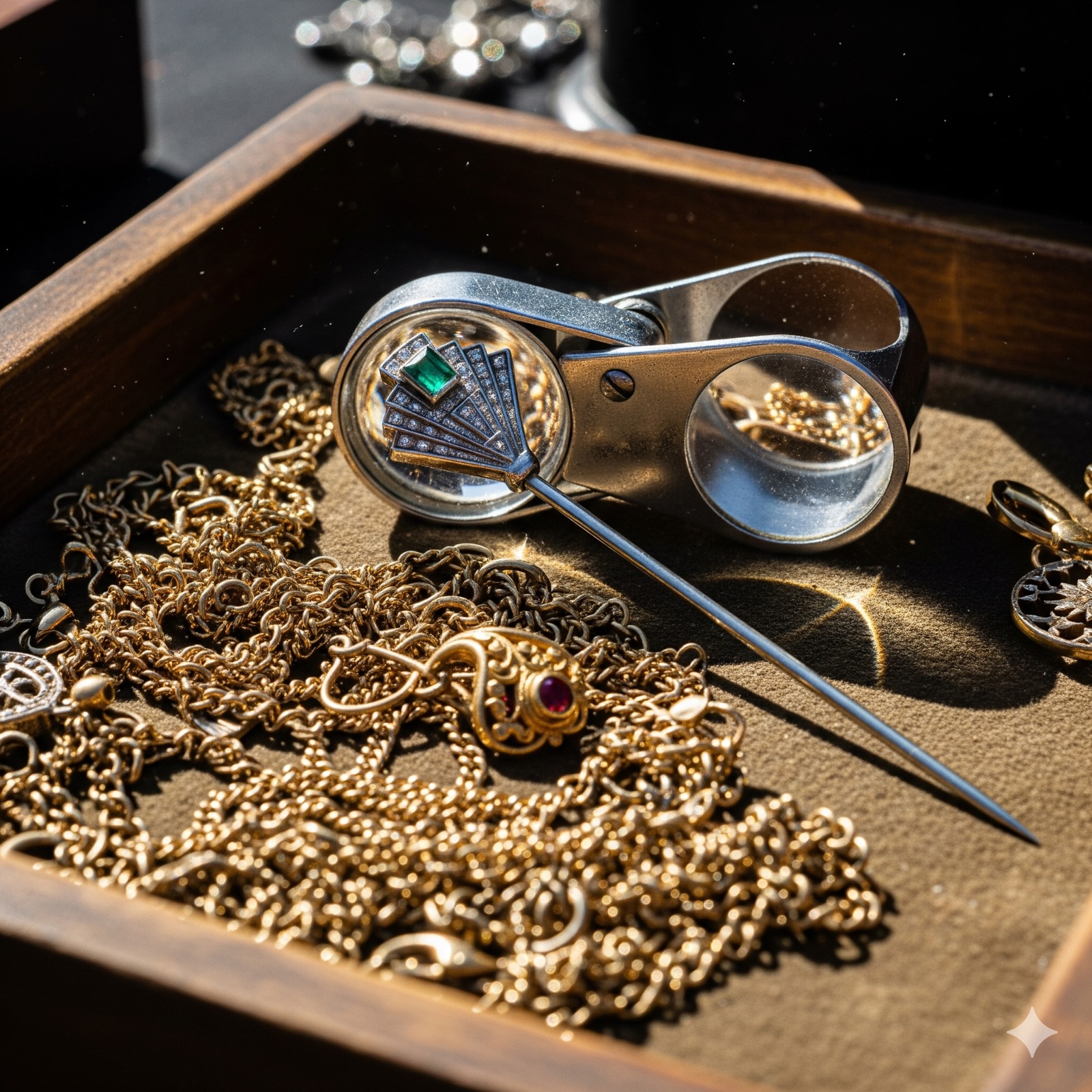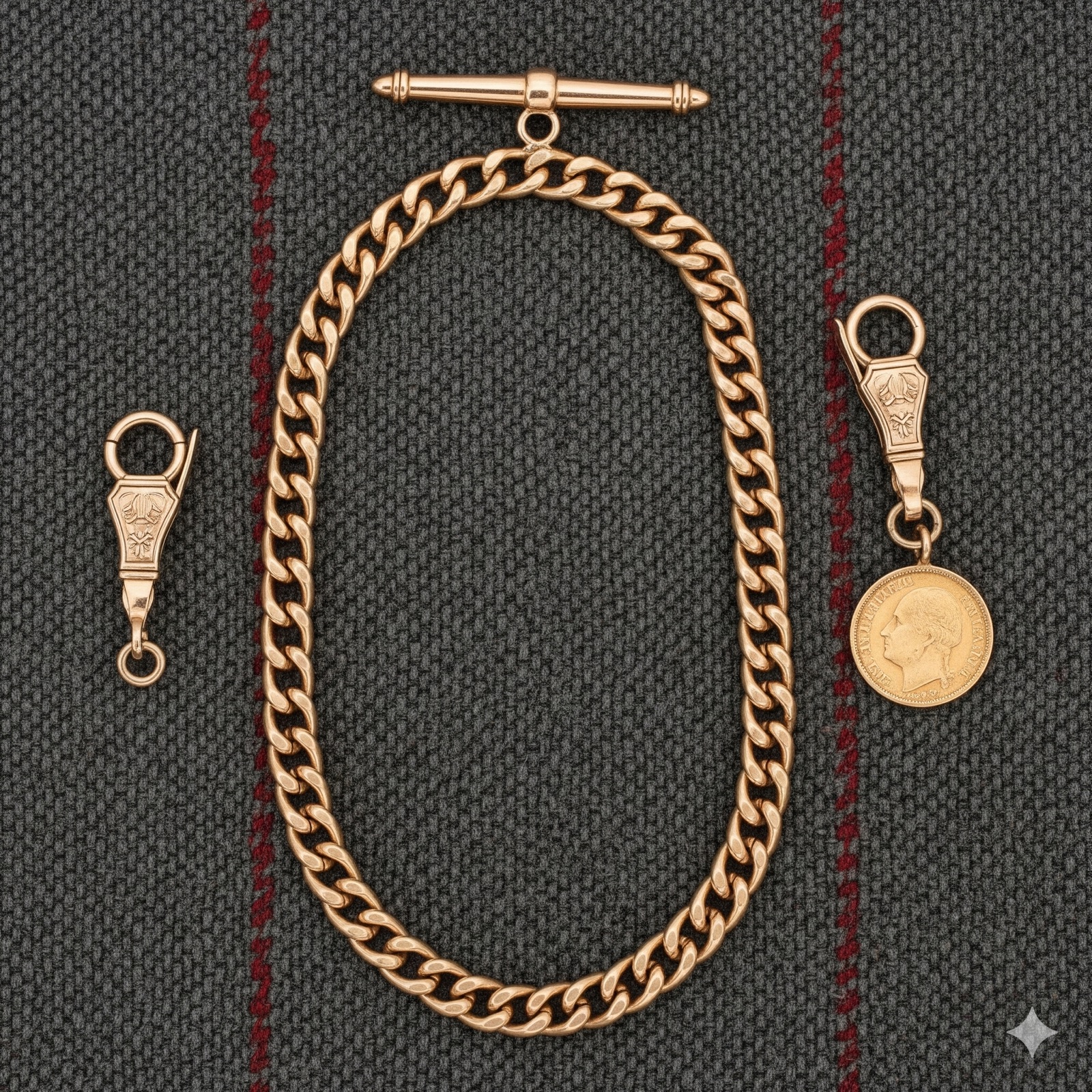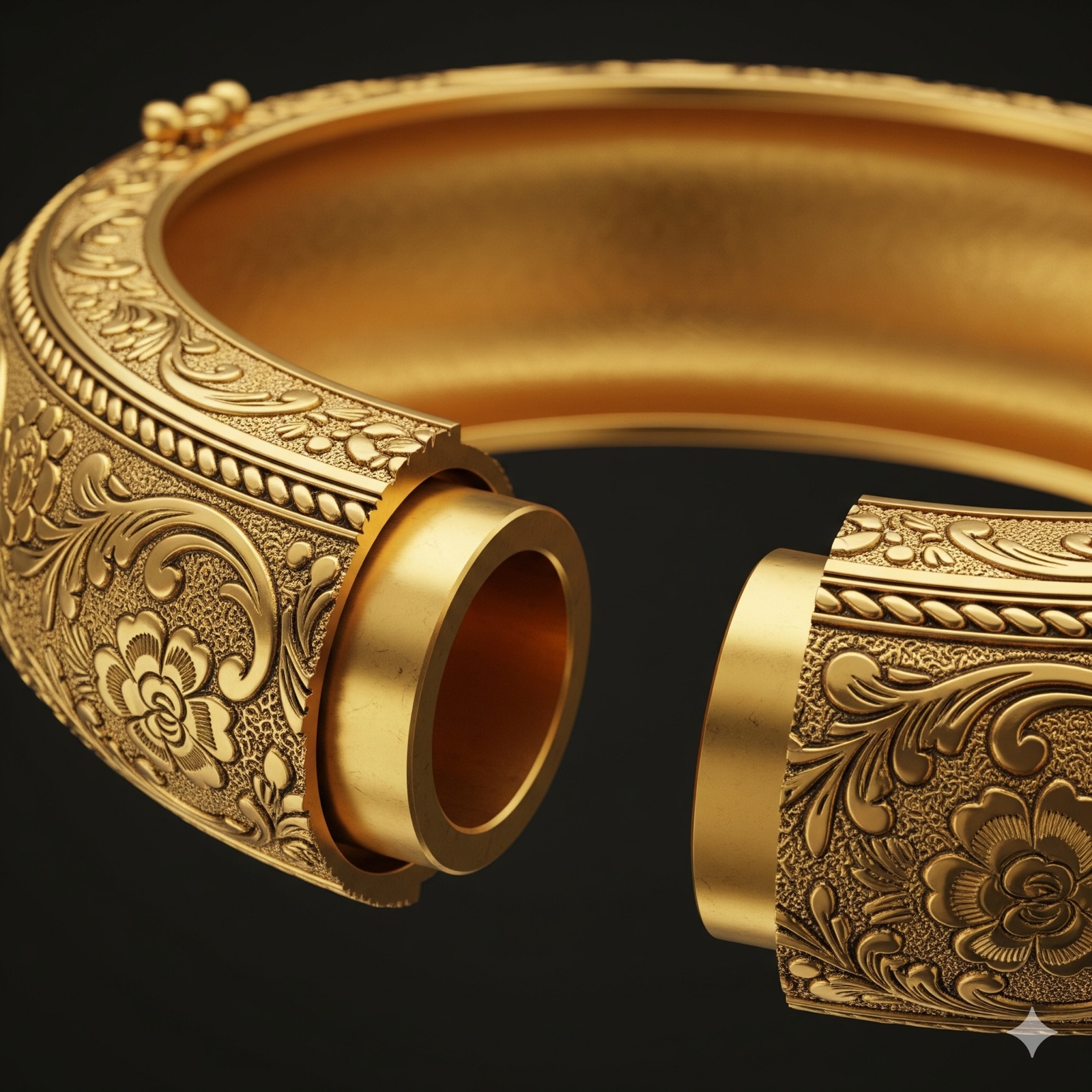
In RareQuiste’s selection criteria, we usually only collect precious metals. But there is one “non-solid gold” material exception, that is Gold Filled.
Many novices see the “GF” mark and think it is cheap gold-plated goods, thus missing out on many exquisite jewelry from the late Victorian era to the 1940s. In fact, the gold content and durability of old Gold Filled are incomparable to modern Gold Plated.
🥪 What is Gold Filled?
Imagine a sandwich.
- Gold Plated: It’s like brushing a very thin layer of butter (gold water) on bread, only a few microns, gone after a few rubs.
- Gold Filled: It’s like covering the bread with a thick slice of cheese (K gold foil).
Gold Filled is a physical mechanical process. Craftsmen mechanically roll a layer of K gold (usually 10K, 12K or 14K) onto the surface of a copper or silver base under high temperature and high pressure.
🏷️ Reading the Mark: 1/20 12K GF
This is the most common mark on antique jewelry:
- 12K: Indicates the purity of the surface gold layer is 12K.
- GF: Abbreviation for Gold Filled.
- 1/20: This is the most critical. It means the weight of the gold layer accounts for at least 1/20 (5%) of the total weight of the jewelry.
In contrast, the gold layer weight of modern gold-plated jewelry may not even reach 0.05%. The gold layer thickness of old Gold Filled is usually 50 to 100 times that of gold plating.
💎 Why is it worth collecting?
1. Durability
Because the gold layer is thick enough, even after 100 years of wear, the skin will not wear out to reveal the copper base underneath. This is why the 1900s gold-filled glasses and pocket watch cases we see at markets still shine brightly today.
2. Price Friendly
It has exactly the same appearance and hypoallergenic properties as K gold, but the price is only one-tenth of K gold. For girls who like to stack gold jewelry, it is a very cost-effective choice.
3. Exquisite Craftsmanship
In the late 19th and early 20th centuries, Gold Filled was regarded as a serious jewelry material. Many large factories (such as Krementz in the United States) would use the same craftsmanship as real gold to make Gold Filled jewelry, with carving and enamel.
⚠️ R’s Pitfall Avoidance Guide
When checking Gold Filled jewelry, focus on High Wear Areas (such as the edges of bracelets, necklace clasps). If these places reveal a black base color (Brass), it means the gold layer has worn through, and the value is greatly discounted. If it is intact overall, it is a good thing that can be passed down.