If you spot a spoon in an antique shop that looks incredibly “unconventional,” don’t assume it’s industrial scrap.
The Victorian era (1837-1901) was an age of the most elaborate—and interesting—dining etiqutte. To showcase refining and breeding, silversmiths invented specialized spoons for almost every type of food. Today, we open the “Silver Dictionary” to decode the mysteries of the Victorian table.
🦴 The Marrow Scoop — Chasing an 18th-Century Delicacy
If you see a “spoon” with two narrow, elongated troughs connected by a thin stem, you’ve found the famous Marrow Scoop.
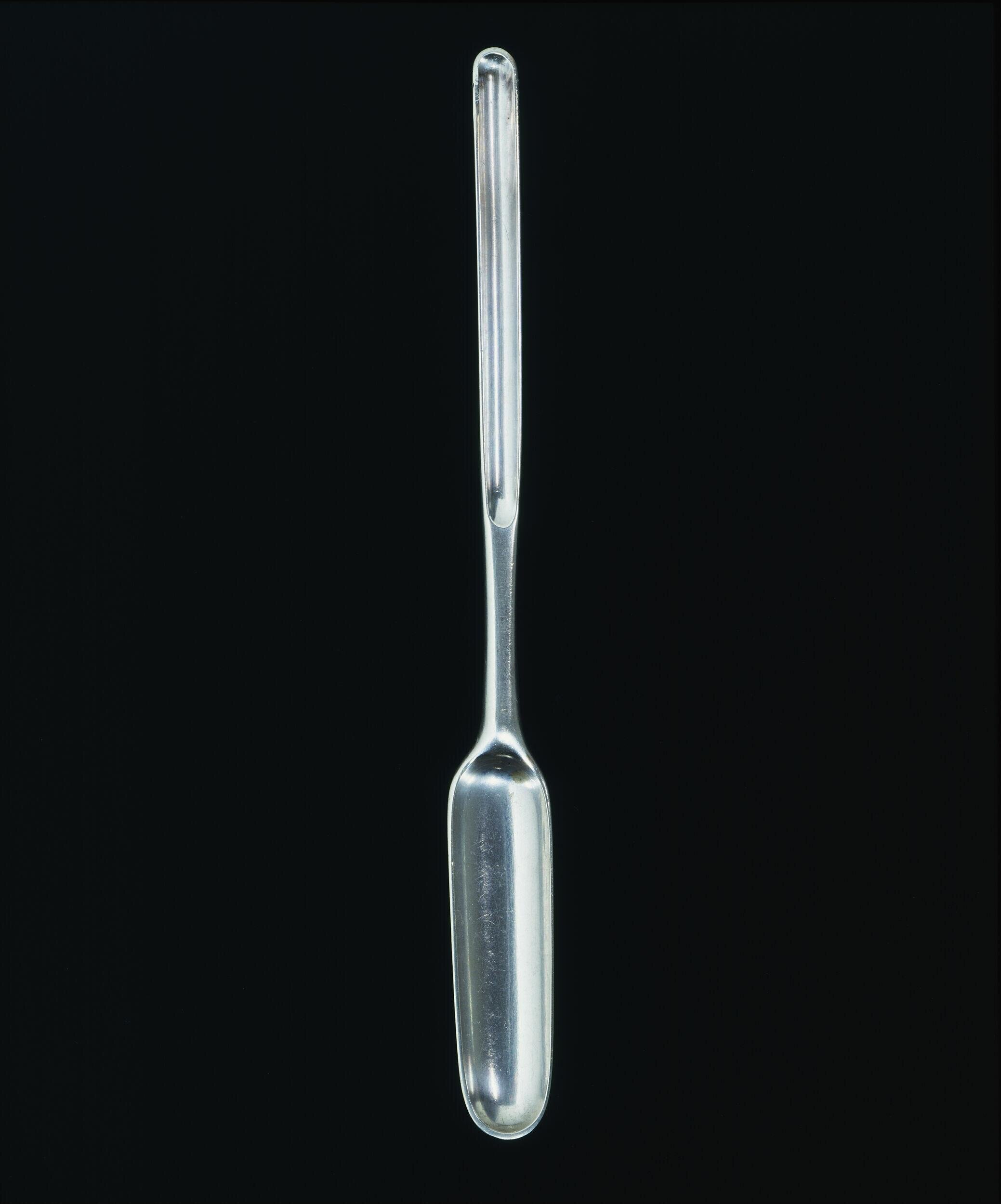
- Design Origin: Roasted bone marrow was a highly prized delicacy in 18th-century Britain. To elegantly extract marrow from deep within the hollow center of meat bones, silversmiths created these specialized tools with long narrow bowls.
- Functional Logic: A standard marrow scoop is typically double-ended. The larger end was used for handling substantial marrow bones (like beef), while the extremely narrow end was specifically designed for smaller bones.
- Historical Evolution: Early versions (late 17th century) were often marrow spoons, featuring a regular spoon bowl at one end and a marrow trough at the other. By the mid-18th century (as seen in the Elias Cachart example above, dated 1748), the double-ended scoop became the standard.
- Collector’s Item: It is an outstanding entry-level piece for antique silver enthusiasts. Not only does it carry significant historical weight, but its robust construction ensures it remains in excellent condition even after 250 years.
🍓 The Berry Spoon — A Visual Masterpiece
These are some of the most ornate and visually pleasing spoons you’ll see in any silver display case.
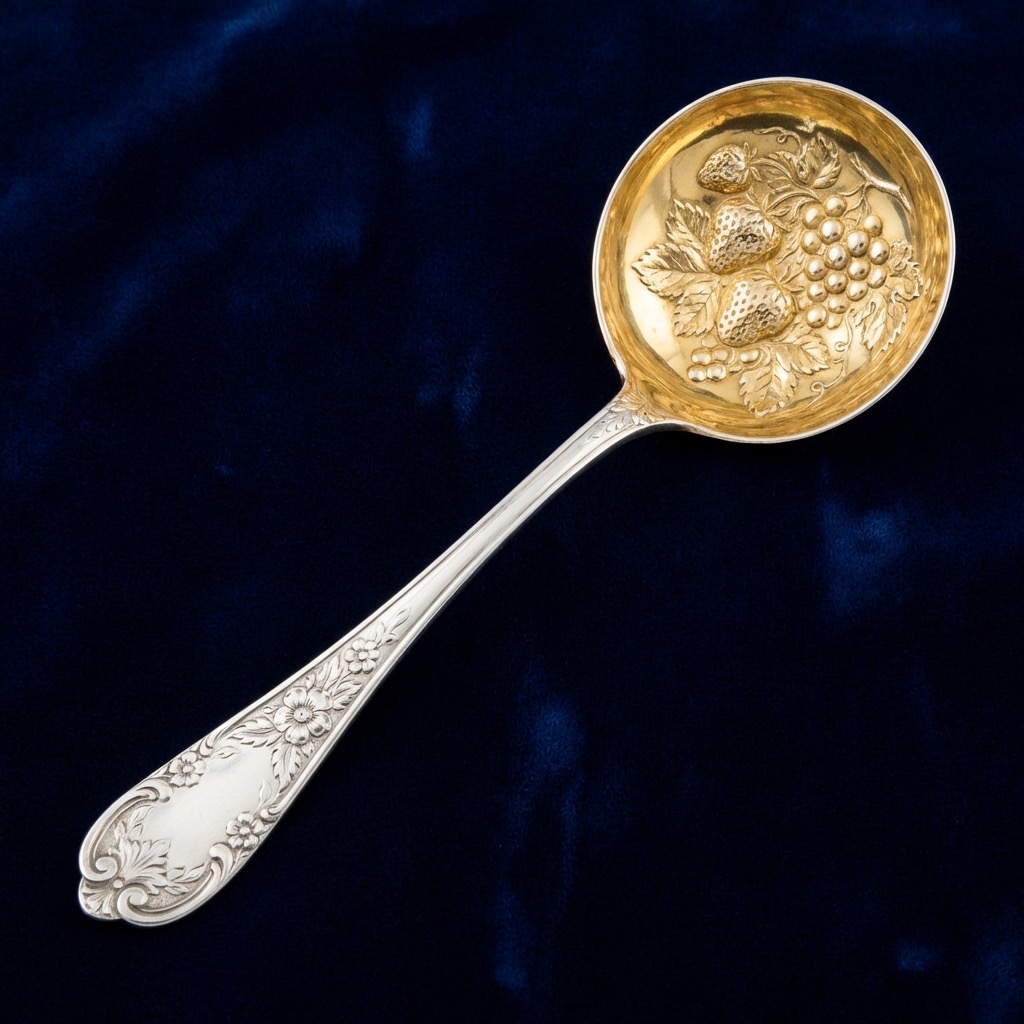
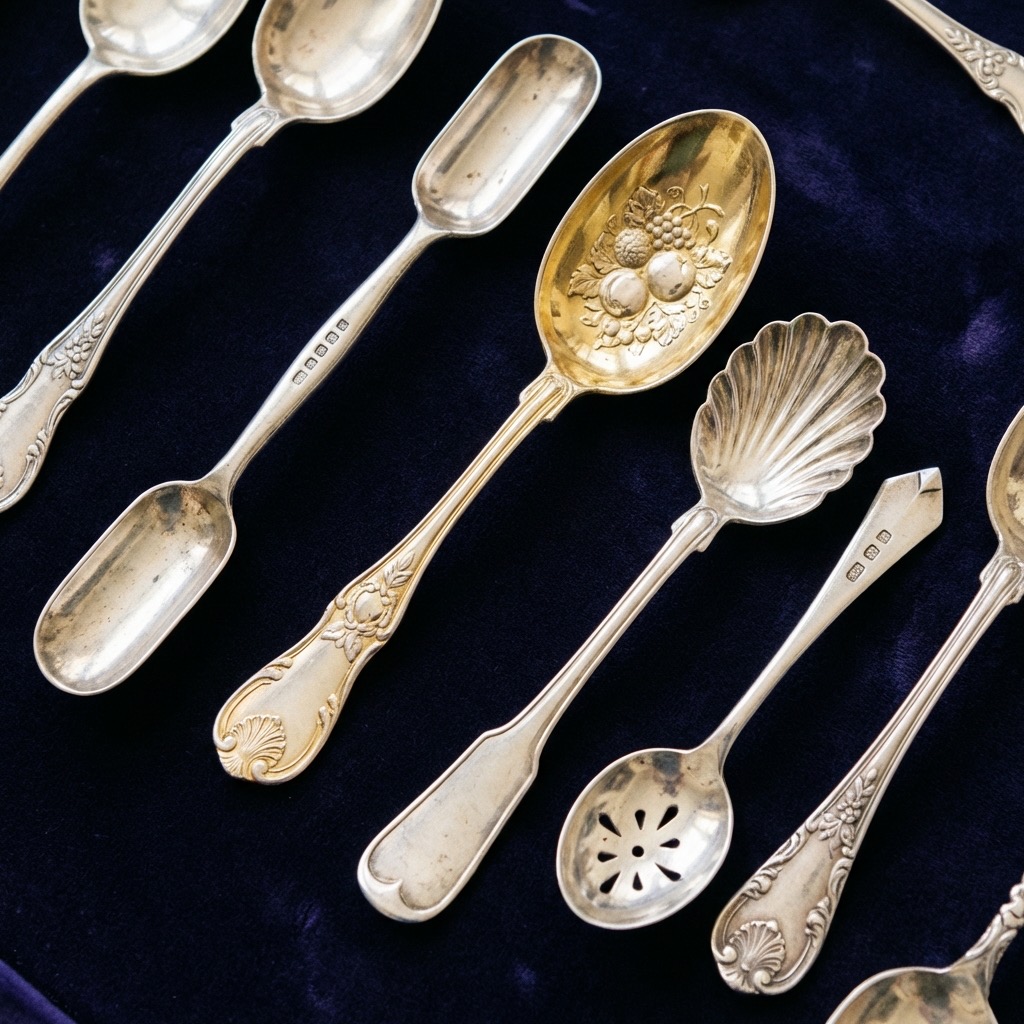
- Features: The bowl is usually decorated with incredibly complex repoussé work, often featuring strawberries, grapes, and other fruits. Additionally, the interior of the bowl is often gilded (Vermeil).
- Function: Used for serving berries mixed with cream or sugar.
- Collector’s Tip: Note that many berry spoons are actually older, plain spoons that were “re-decorated” during the late Victorian period. Always check the hallmarks to see if the decoration style matches the production year.
🍵 The Caddy Spoon — The Most Diverse Single Item
A favorite for tea lovers. This is a small spoon used for scooping dry tea leaves from a Tea Caddy.
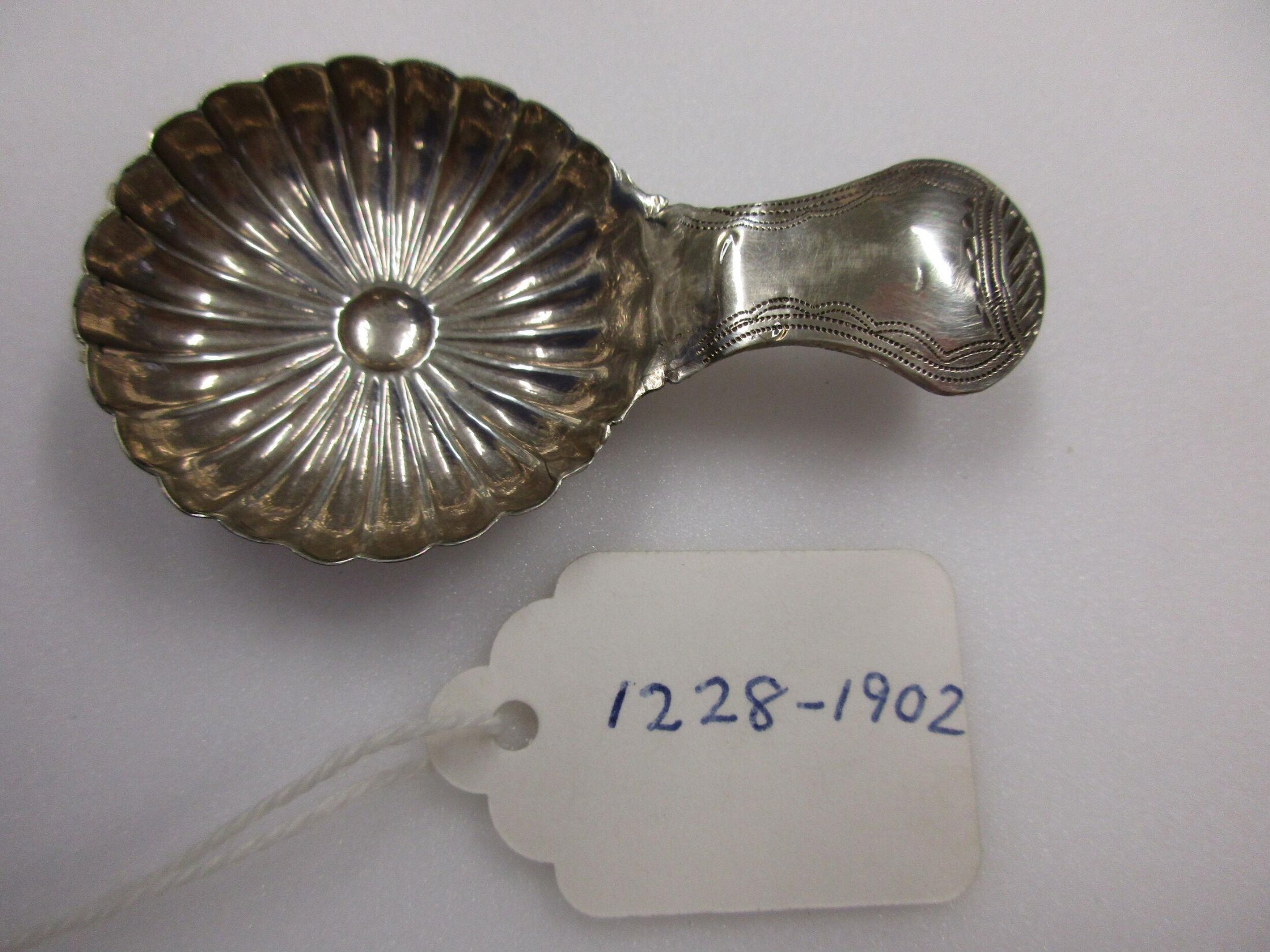
- Features: It has a very short handle (to fit inside the tea caddy) and comes in an endless variety of shapes.
- Classic Shapes:
- Shell Bowl: The most classic, a tribute to the early Chinese export tea containers.
- The Hand: Extremely rare and highly collectible.
- Shovel: A functional, industrial look.
🕸️ The Mote Spoon — The Spoon that “Disguises”
At first glance, it looks like a tea strainer, but its handle ends in a sharp point.
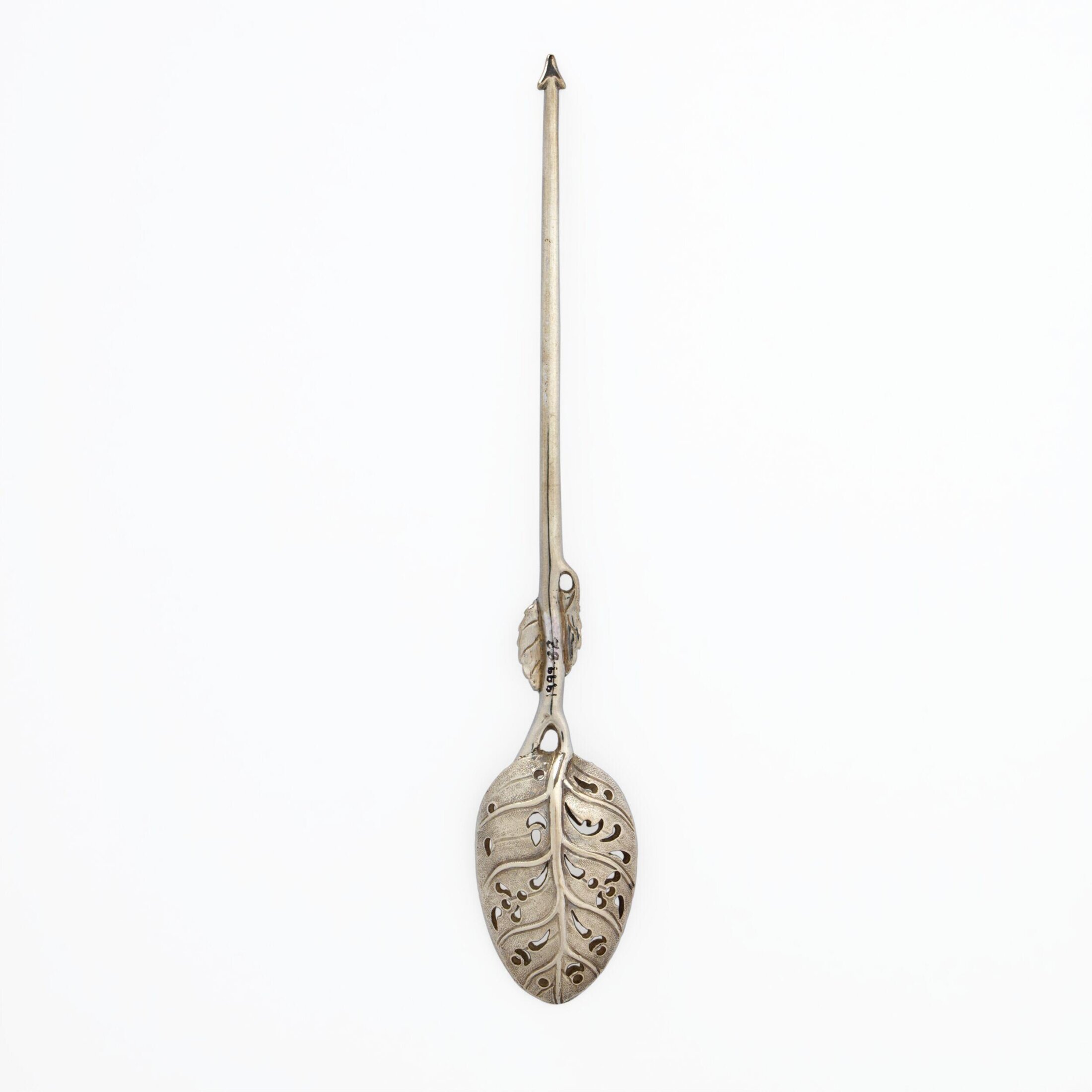
- Pierced Bowl: Used for skimming off floating tea leaves (motes) from the cup.
- Pointed Stem: Since Victorian teapot spouts were easily clogged by large tea leaves, this sharp end was used for unclogging the spout.
📝 Summary: The Secret Code of Spoons
Victorian silver wasn’t just a tool; it was a ticket to class and etiquette.
- For hardcore vintage vibes, pick the Marrow Scoop.
- For tabletop aesthetics, pick the Berry Spoon.
- For tea enthusiasts, a Caddy Spoon or Mote Spoon is the perfect conversation starter.
In the next part, we will enter the “Mechanical Power” of the table—exploring Asparagus Tongs and Fish Servers that are more complex than pliers.