Johannes Vermeer’s Girl with a Pearl Earring is undoubtedly one of the most fascinating portraits in art history.
Often called the “Mona Lisa of the North,” her enigmatic gaze and the exotic turban have captivated viewers for centuries. But for jewelry lovers, the true protagonist is the massive, teardrop-shaped pearl hanging from her ear.
The Impossible Pearl
From a gemological perspective, this pearl is almost “too perfect.”
- Size: It is enormous. If it were a natural saltwater pearl, it would be priceless, far beyond the means of Vermeer or his likely models.
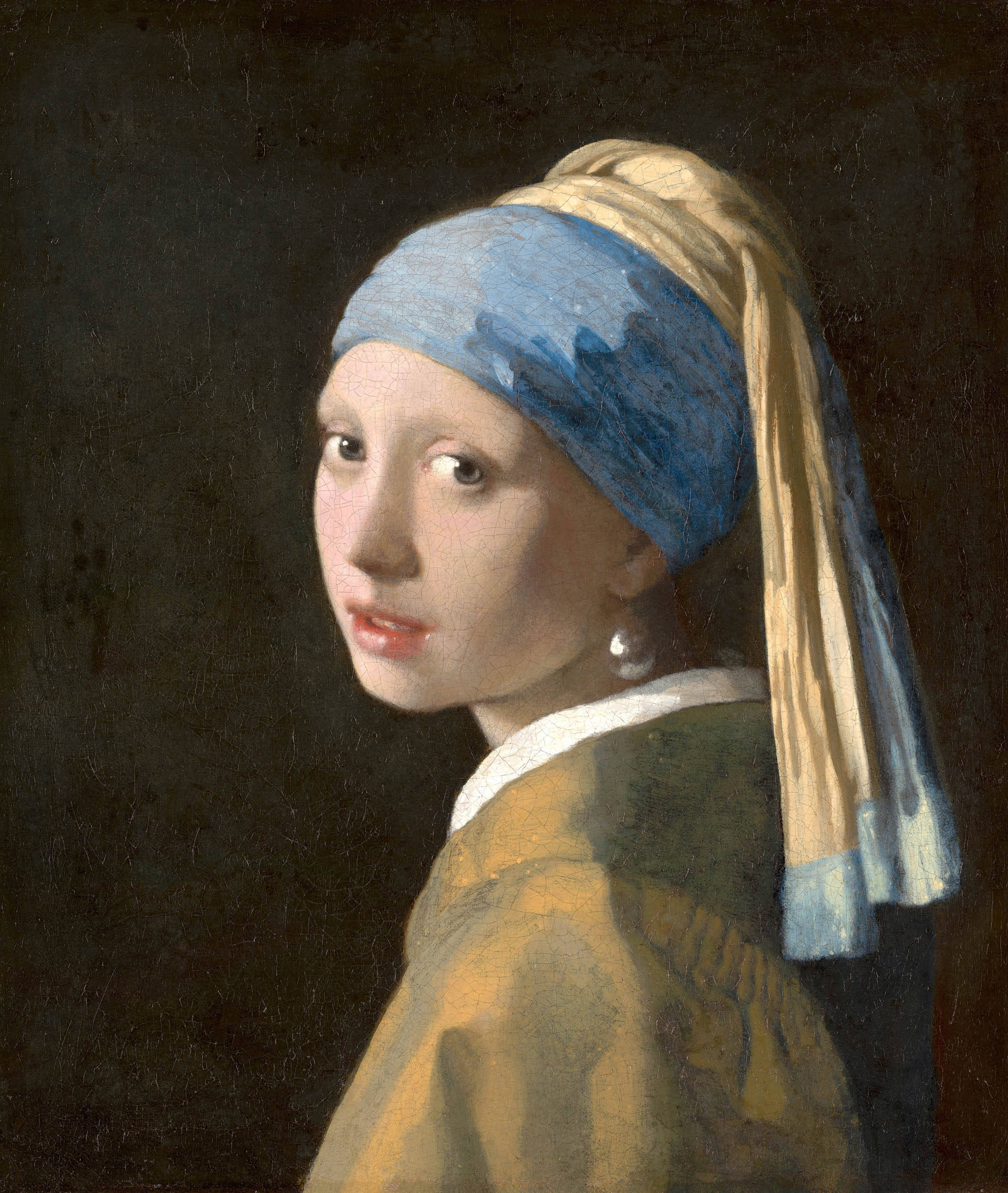
- Luster: Look closely at how Vermeer painted it. He didn’t paint a “white ball.” He used just two strokes of white paint: one for the bright highlight reflecting the light source (top left), and one for the soft reflection of the girl’s white collar (bottom).
The rest of the pearl is just the shadow and the color of the background. It is an illusion of light.
Real or Fake?
Art historians and gemologists have debated this for years.
- Theory A: It’s a glass imitation. Venetian glassmakers in the 17th century were already skilled at creating “faux pearls” using glass spheres coated with essence of pearl (made from fish scales). This would explain the size and the metallic sheen.
- Theory B: It’s tin. Some suggest it might be a polished tin earring, which was a cheaper alternative.
- Theory C: It’s imagination. Vermeer wasn’t a photographer. He might have exaggerated a smaller pearl or invented it entirely to create a focal point for the composition.
The Master of Light
Regardless of the material, this earring is a testament to Vermeer’s mastery of light.
He understood that we don’t see objects; we see the light reflecting off them. By reducing the pearl to a few essential brushstrokes, he captured the essence of a pearl—its luster and its ability to gather light from its surroundings.
It hangs there, suspended in the dark void, balancing the girl’s turning pose. It is a point of stillness in a moment of movement.
Conclusion
Whether real, fake, or imagined, this pearl has become the most famous piece of jewelry in the world. It reminds us that in art, truth is not about material reality, but about the visual truth of light and shadow.